The right saw makes it easier to portion bone-in cuts and process game without fighting a blade that is too short, bulky, or difficult to clean. The best choice depends on what you cut, where you work, and how often you butcher.
This roundup covers compact folding saws, full-size manual butcher saws, and an electric bandsaw. Use the buying guide below to narrow the field by cutting capacity, maintenance, and workspace needs.
Best 10 Meat Saw for Butchering Picks for 2026
Best Quick-Change Manual Saw
Weston 22-Inch Meat and Bone Saw
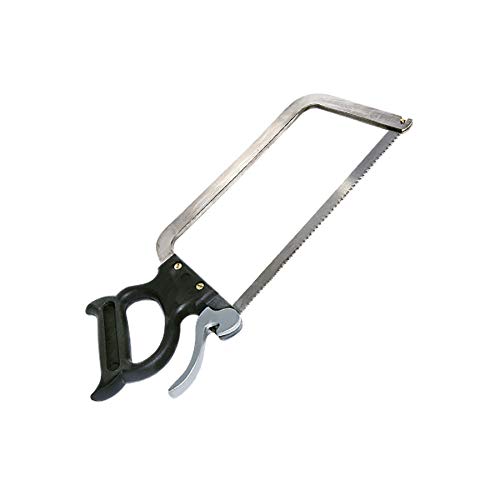
- 22-inch stainless steel blade
- Quick-release blade changes
- Ergonomic handle with trigger lock
Best For: Home butchers and hunters processing large cuts
Best Extended Blade
KATA 25-Inch Manual Butcher Saw

- 25-inch blade for large cuts
- Stainless steel frame
- Ergonomic polypropylene handle
Best For: Large game and substantial frozen cuts
Best Powered Option
1500W Commercial Electric Meat Bandsaw

- 1500W electric motor
- Adjustable cutting thickness
- Requires 230V power
Best For: Higher-volume bone and frozen-meat processing
Best Hardwood-Handle Saw

- 22-inch high-carbon steel blade
- Oversized hardwood handle
- Adjustable blade tension
Best For: Hunters who prefer a traditional hand saw
Compact Hunting Pick

- 7-inch high-carbon-steel blade
- Triple-ground teeth for bone cutting
- Non-slip TPR grip; case included
Best For: Portable deer processing and camping
Home Butchering Pick

- 17.5-inch carbon-steel blade
- Stainless-steel frame
- Designed for meat, frozen portions, and bone
Best For: Home butchering and BBQ preparation
Folding Field Pick

- Folding 65Mn-steel blade
- Spare blade and storage bag included
- Three locking angles; wood recommended
Best For: Multipurpose hunting and camping carry
Best with Extra Features

- 20-inch SK5 steel blade
- Stainless steel frame
- 2.6-pound manual saw
Best For: Home butchers and hunters who want manageable cutting reach
Best for Quick Blade Changes

- 22-inch stainless steel blade
- Quick-release cam handle
- Ergonomic molded ABS grip
Best For: Processors who value convenient blade changes
Best for Extended Reach

- Listed 25-inch blade
- Quick-release cam handle
- Verify conflicting blade-length details
Best For: Large cuts where extra saw reach is useful
Best Quick-Change Manual Saw – Weston 22-Inch Meat and Bone Saw
The Weston is a manual meat saw for butchering large cuts from a farm, co-op, or hunting trip. Its 22-inch stainless steel blade and frame are suited to breaking meat and bone into manageable portions.
Best For: Home butchers and hunters who want a corrosion-resistant saw with convenient blade changes.
Pros:
- 22-inch stainless steel blade and sturdy stainless steel frame.
- Quick-release handle simplifies blade changes.
- Ergonomic handle and trigger lock support comfortable cutting and blade tension.
Cons:
- Manual operation requires physical effort, especially on larger jobs.
- At 27 inches overall, it needs storage space.
The quick-change design makes this a practical pick if you process substantial cuts but prefer a hand-operated tool.
Best Extended Blade – KATA 25-Inch Manual Butcher Saw
If you need extra blade length in a manual meat saw for butchering, the KATA offers a 25-inch blade for large portions of beef, pork, frozen meat, and game. Its stainless steel frame and ergonomic polypropylene handle are designed for controlled hand use.
Best For: Hunters and home processors tackling large game or substantial frozen cuts.
Pros:
- 25-inch blade provides reach for larger cuts.
- Stainless steel frame supports blade stability during cutting.
- Ergonomic handle improves control during longer sessions.
Cons:
- Manual cutting still takes effort on hard bone or frozen meat.
- The long blade may be more than needed for small kitchen portions.
Choose this one for its extended cutting capacity rather than compactness; it is aimed at sizable butchering jobs.
Best Powered Option – 1500W Commercial Electric Meat Bandsaw
For buyers considering a powered meat saw for butchering, this commercial bandsaw pairs a 1500W motor with a stainless steel blade for cutting bone and frozen meat. The listing specifies a 19.3-by-15-inch workbench and an adjustable cutting thickness of 0.16 to 7.9 inches.
Best For: Higher-volume processing where powered cutting and adjustable portion thickness matter.
Pros:
- 1500W motor supports powered cutting through bone and frozen meat.
- Adjustable 0.16- to 7.9-inch cutting thickness.
- Includes six blades and has a stated 2-year limited warranty.
Cons:
- Requires a 230V electrical supply.
- At 70.6 pounds, it is far less portable than a manual saw.
Check your available power and workspace before choosing this machine; its powered capacity is most useful when processing volume justifies the setup.
Best Hardwood-Handle Saw – GreatNeck 22-Inch Bone Saw
The GreatNeck is a traditional manual meat saw for butchering, with a 22-inch high-carbon steel blade, solid steel frame, and oversized hardwood handle. It is intended for meat, bone, and game processing.
Best For: Hunters and home processors who prefer a hardwood grip and adjustable blade tension.
Pros:
- 22-inch high-carbon steel blade and solid steel frame.
- Oversized hardwood handle offers a substantial grip.
- Tension adjustment screw allows secure blade changes.
Cons:
- Manual operation demands more effort than an electric saw.
- The hardwood handle may not appeal to buyers seeking an all-metal or synthetic-grip tool.
Its classic frame-and-handle design is a sensible fit for field or processing-station work when you want a hand saw with adjustable tension.
Compact Hunting Pick – RUITOOL 7-Inch Bone Saw
If you need a compact meat saw for butchering game in the field, the RUITOOL pairs a 7-inch high-carbon-steel blade with triple-ground teeth designed for cutting bone and ribs.
Best For: Hunters who want a portable hand saw for deer processing and camping.
Pros:
- Triple-ground teeth are designed to cut through bone.
- Non-slip TPR grip helps with control in slippery conditions.
- Blade and handle are designed for easy cleaning; a case is included.
Cons:
- The 7-inch blade offers less cutting reach than a full-size frame saw.
- Hand-powered cutting requires physical effort.
Choose this one when portability and grip matter more than the capacity of a larger butcher saw.
The KATA is a frame-style meat saw for butchering beef, pork, deer, and frozen portions without electricity. Its 17.5-inch carbon-steel blade provides more cutting reach than the compact hunting saws here.
Best For: Home butchers and BBQ cooks breaking down larger cuts or smaller bone sections.
Pros:
- Long blade accommodates larger cuts of meat.
- Stainless-steel frame is designed to keep the blade stable.
- Polypropylene handle is shaped for comfortable control.
Cons:
- Its 23.6-inch overall length takes more storage space than a folding saw.
- Manual operation takes effort, particularly on tougher cuts.
This is the more practical choice for a dedicated home-processing setup when cutting reach matters more than packability.
For shoppers considering a portable meat saw for butchering game, this folding hunting saw has a 65Mn-steel blade, an included spare, and a storage bag. Its listed uses also include cutting branches and preparing firewood.
Best For: Hunters and campers who prioritize a folding, multipurpose saw with a spare blade.
Pros:
- Folds for transport and comes with a storage bag.
- Includes a replacement blade.
- Locks at 120, 150, or 180 degrees for different cutting positions.
Cons:
- The supplied specifications recommend wood as a cutting surface, so its suitability for bone cutting is less clear.
- Not a full-size frame saw for processing large cuts.
Its folding design and adjustable angles stand out for field carry, but buyers focused primarily on bone cutting should note the wood-focused surface recommendation.
Best with Extra Features – KATA 20-Inch Manual Meat Saw
If you need a meat saw for butchering at home or at hunting camp, this KATA model pairs a 20-inch SK5 steel blade with a stainless steel frame. Its size offers more reach than a compact saw without moving up to a larger frame.
Best For: Home butchers and hunters processing deer, beef, pork, or frozen portions without electricity.
Pros:
- 20-inch blade provides useful reach for meat and bone cuts.
- Stainless steel frame and polypropylene handle support steady hand control.
- Manual operation works in kitchens, garages, farms, and camps.
Cons:
- Requires manual effort for every cut.
- Shorter blade than the 22- and 25-inch options in this roundup.
Choose this one if manageable size matters as much as cutting reach. At 2.6 pounds, it is the lightest of the models here with a stated weight.
Best for Quick Blade Changes – 22-Inch Cam-Lock Butcher Saw
This 22-inch meat saw for butchering combines a 304 stainless steel blade with a carbon steel holder. Its quick-release cam handle is the notable feature if you expect to change blades during meat and bone processing.
Best For: Butchers and home processors who want a longer manual saw with convenient blade changes.
Pros:
- 22-inch serrated blade gives more cutting length than a 20-inch model.
- Quick-release cam handle allows blade changes without a key.
- Molded ABS handle is shaped for a comfortable grip.
Cons:
- At 3 pounds, it is heavier than the listed 20-inch KATA saw.
- Manual cutting still requires physical effort.
The cam mechanism and longer blade distinguish this option. Check that its 27.36-inch overall length fits your workspace and storage area.
Best for Extended Reach – 25-Inch Cam-Lock Butcher Saw
For buyers prioritizing blade length in a meat saw for butchering, this model is listed with a 25-inch stainless steel blade and a 30.31-inch overall length. It also has a carbon steel blade holder and a quick-release cam handle.
Best For: Processing large pieces of game, pork, or beef when a longer manual saw suits the job.
Pros:
- Listed 25-inch blade offers the longest reach of these three saws.
- Quick-release cam handle simplifies blade changes.
- Molded ABS handle provides an ergonomic grip.
Cons:
- Its 30.31-inch overall length needs more working and storage space.
- The supplied specifications conflict: one bullet describes a 22-inch blade despite the 25-inch listing.
Consider this saw for its longer listed format, but verify the blade length before buying because the product details are inconsistent.
How We Picked the Best Meat Saw for Butchering
We focused on the practical differences buyers can assess from the listed products: manual versus electric operation, blade length, folding versus full-size construction, blade material, and stated cutting capacity. The selection spans portable hunting saws, mid-size and longer butcher saws, and a countertop electric bandsaw. Product specifications do not establish real-world cutting speed, durability, or ease of cleaning, so check current listings and owner feedback before buying.
Quick Comparison: Which Saw Fits Your Work?
For field dressing and packability: A compact folding saw or the RUITOOL hunting-oriented saw is easier to carry than a full-size frame. Confirm the folded dimensions and how securely the blade locks before relying on one in the field.
For occasional home processing: The 18- and 20-inch KATA saws offer shorter manual alternatives when storage space or maneuverability matters. Full-size 22-inch options from Weston, GreatNeck, and the listed stainless-blade butcher saw suit buyers who want more blade length for bone-in cuts.
For larger carcasses or longer cuts: The 25-inch KATA and 25-inch stainless-blade butcher saw provide the longest listed manual blades. The 1500W countertop bandsaw is the distinct option for buyers considering powered cutting; verify its footprint, cutting clearance, and electrical requirements first.
Key Buying Factors for a Meat Saw for Butchering
Blade Length and Cutting Clearance
A longer blade allows a longer stroke, but it also needs room around the cut. Choose for the largest bones and sections you regularly handle, not just the largest saw you can store. For the electric model, check its stated 0.16- to 7.9-inch cutting range against your intended portions and confirm what that measurement covers.
Blade, Frame, and Replacement Parts
Blade steel, tooth design, and frame rigidity affect how a saw feels in use, but listed materials alone do not prove that one cuts better. Look for a blade that stays tensioned and tracks straight. If you expect frequent use, check whether correctly sized replacement blades are available and whether swaps require tools. A quick-release or replaceable-blade design can simplify maintenance, provided it locks securely.
Cleaning, Safety, and Space
Raw-meat tools need thorough cleaning after each session. Examine whether you can reach joints, handles, blade mounts, and—in a bandsaw—areas around the blade path and work surface. Use a stable cutting setup, keep hands clear of the blade, and follow the manufacturer’s instructions. An electric saw also needs dedicated counter space and a suitable power supply.
Who Should Buy Which Meat Saw for Butchering?
Choose a folding or compact saw if portability is your first priority and cuts are relatively small. Pick an 18- to 22-inch manual saw for occasional butchering when you want straightforward storage and no power requirement. Consider a 25-inch manual saw if longer strokes and cutting reach matter more than compactness. A countertop bandsaw makes the most sense if you process enough bone-in meat to justify its space, cost, and cleaning demands. Whatever you choose, confirm replacement-blade availability and the saw’s usable cutting capacity before ordering.