If you need fast, organized cold topping access, a countertop refrigerated topping station can streamline prep without taking over your kitchen. These compact units help keep ingredients within reach while supporting better food safety and workflow.
In this roundup, we focus on practical differences like pan capacity, temperature control, build quality, and fit for different service volumes.
Best 10 Countertop Refrigerated Topping Station Picks for 2026
Compact Countertop Prep Cooler

- 130W cooling with auto defrost
- 35-46°F digital temperature control
- Stainless steel build with hinged lid
Best For: Food trucks and compact sandwich prep counters
High-Capacity Prep Station
Arctic Air ACP55 55-inch Condiment Cooler
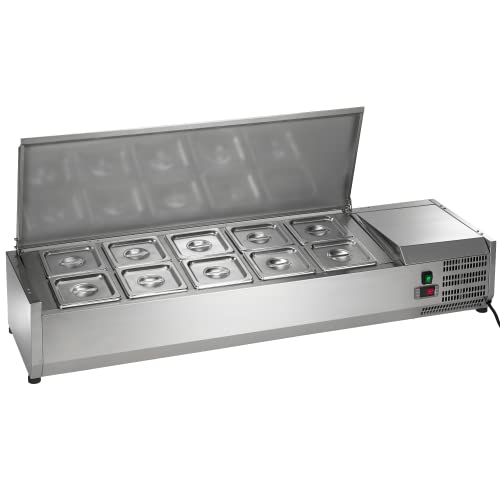
- 10 sixth-size pans with covers
- 33-41°F electronic thermostat
- Full stainless steel interior and exterior
Best For: High-traffic prep lines needing many toppings
Glass-Guard Salad Bar Cooler
Garvee 140W Glass Shield Prep Station

- 140W cooling with auto defrost
- 3 x 1/3 pans plus 4 x 1/6 pans
- Tempered glass guard for visibility
Best For: Counters that need visible chilled toppings
Wide Stainless Topping Cooler
VEVOR 60-inch Condiment Station
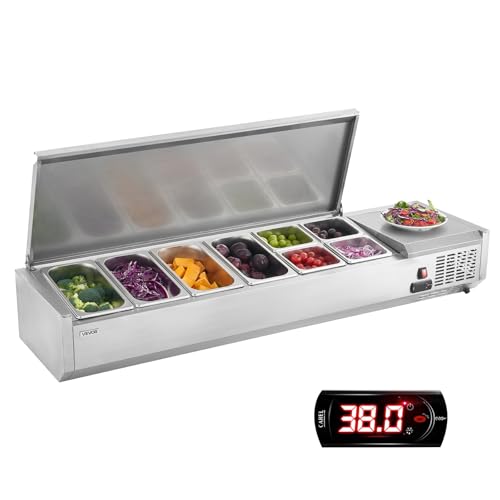
- Wide 60-inch countertop layout
- 4 x 1/3 pans and 4 x 1/6 pans
- 35-46°F digital temperature control
Best For: Restaurants needing a wider topping display
Elite Multi-Pan Build
140W 7-pan countertop condiment station

- 140W compressor holds 35.6°F–46.4°F
- 3 x 1/3 pans plus 4 x 1/6 pans
- Stainless body with glass guard and hinged lid
Best For: Busy prep counters needing flexible pan storage and strong cold retention
Compact Five-Pan Option
120W compact refrigerated condiment station
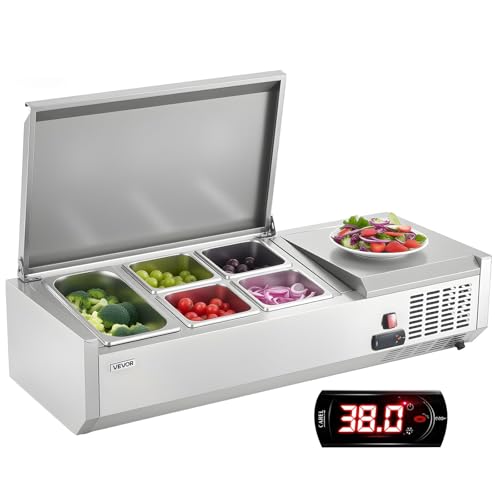
- 120W compressor for steady, quiet cooling
- 1 x 1/3 pan and 4 x 1/6 pans
- Digital control with stainless guard and PC lid
Best For: Small commercial prep areas that need a compact, easy-to-manage cold rail
High-Capacity Display Rail
140W glass-guard refrigerated condiment rail

- 140W compressor with R290 refrigerant
- 4 x 1/3 pans plus 4 x 1/6 pans
- Glass guard with digital control and defrost
Best For: Busy service counters that want maximum pan flexibility and clear ingredient visibility
High-Capacity Glass Display Station

- Eight pans provide a large divided topping setup
- Glass guard offers a clear, cold-holding display
- Extra base space helps with utensils and overflow
Best For: Busy prep lines needing capacity and display
Display-Focused Compact Station
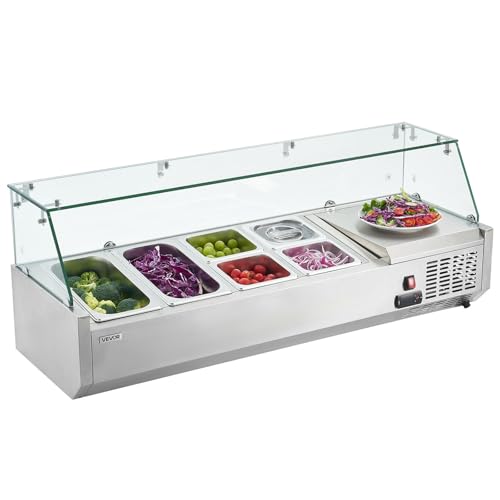
- 48-inch countertop footprint with glass guard
- 2 x 1/3 and 4 x 1/6 pans for organized storage
- Digital temperature control with 35-46 range
Best For: Compact spaces that still need visible topping display
Compact Countertop Prep Cooler – Garvee 130W Condiment Station
If you need a countertop refrigerated topping station for fast-paced prep service, this Garvee unit focuses on simple cold storage and a compact footprint. The 130W cooling system, auto defrost, and digital temperature control make it practical for keeping sauces, veggies, and sandwich toppings chilled during service.
Best For: Food trucks, cafés, delis, and compact sandwich prep counters.
Pros:
- 130W cooling with auto defrost helps reduce manual maintenance.
- Adjustable 35-46°F temperature range with digital LED control.
- Stainless steel body and guard support easy cleaning and durability.
- Includes 1/3 and 1/4 pan configuration for flexible topping setups.
Cons:
- Pan mix is smaller than some larger multi-pan stations.
- Best suited to countertop use rather than high-volume full-line prep.
Overall, this is a straightforward refrigerated condiment station for operators who want reliable cold holding in a space-saving design. It balances useful pan capacity with easy temperature control and low-maintenance operation.
High-Capacity Prep Station – Arctic Air ACP55 55-inch Condiment Cooler
The Arctic Air ACP55 is a larger countertop refrigerated topping station built for organized condiment storage. With 10 sixth-size pans, stainless steel construction, and an electronic thermostat, it suits operations that need a wide ingredient spread at a consistent chilled temperature.
Best For: Busy prep lines that need lots of topping options in one refrigerated station.
Pros:
- 10 included 1/6-size pans with covers provide strong ingredient organization.
- 33-41°F temperature range supports cold holding for common toppings.
- Full stainless steel interior and exterior improve durability and cleanup.
- Self-contained refrigeration uses R600a refrigerant for even cooling.
Cons:
- Manual defrost requires more upkeep than auto-defrost models.
- Larger 55-inch footprint may be too big for tight counters.
For operators who need capacity first, this unit delivers a practical refrigerated condiment station with plenty of pan space. Its size and stainless build make it a strong fit for established prep areas.
Glass-Guard Salad Bar Cooler – Garvee 140W Glass Shield Prep Station
This Garvee countertop refrigerated topping station is designed for commercial ingredient display with a stronger 140W cooling system and a tempered glass guard. It combines a practical pan layout, digital temperature control, and automatic defrost to help keep toppings chilled and visible during service.
Best For: Sandwich shops, convenience stores, coffee shops, and compact salad bars.
Pros:
- 140W cooling with auto defrost supports steady daily use.
- 3 x 1/3 pans and 4 x 1/6 pans offer flexible ingredient storage.
- Tempered glass guard improves visibility while protecting ingredients.
- ETL certification adds confidence for commercial food-service use.
Cons:
- Included warranty is short at 30 days per the product details.
- Pan configuration may be limiting if you need larger individual compartments.
As a refrigerated condiment station, this model is well suited to service counters that want a clear display and dependable chilled holding. It is especially useful when presentation and food protection matter as much as cold storage.
Wide Stainless Topping Cooler – VEVOR 60-inch Condiment Station
If you need a countertop refrigerated topping station with more room to spread out ingredients, this VEVOR model offers a wide 60-inch layout and a full set of divided pans. Its 130W compressor cooling, digital temperature control, and stainless guard make it a practical fit for commercial topping lines.
Best For: Restaurants, food stalls, and retail prep lines that want a wide refrigerated topping display.
Pros:
- Wide 60-inch format provides generous working space.
- Includes 4 x 1/3 pans and 4 x 1/6 pans in SUS 304 stainless steel.
- 35-46°F temperature control with digital LED display.
- PC lid and stainless guard help protect food and reduce contamination risk.
Cons:
- At 59 inches wide, it needs more counter space than compact units.
- Open-top style may be less enclosed than lidded alternatives when not in use.
For operators who need a larger refrigerated condiment station without moving to a full-sized prep table, this VEVOR unit offers a balanced mix of capacity and control. The wide layout makes it easier to organize multiple toppings in one place.
Elite Multi-Pan Build – 140W 7-pan countertop condiment station
This countertop refrigerated topping station is built for busy prep lines that need dependable cold holding and easy ingredient access. With a 140W compressor, a digital temperature display, and a modular pan layout, it suits sandwich, salad, and topping service where organization matters as much as cooling.
Best For: Restaurants and prep counters that need a compact, stainless, multi-pan cold station with a glass guard.
Pros:
- 140W cooling keeps contents in the 35.6°F–46.4°F range.
- Includes 3 x 1/3 pans and 4 x 1/6 pans for flexible ingredient setup.
- Digital temperature control plus one-touch defrost helps simplify daily use.
- Stainless body, PC lids, and hinged cover support durability and cleanliness.
Cons:
- Large footprint for a countertop unit at 51 inches wide.
- Designed for prep/service use, not long-term storage.
- Best results depend on maintaining a suitable commercial electrical setup.
Overall, this is a practical countertop refrigerated topping station for operators who want a larger pan count and a sturdy build. It balances access, visibility, and temperature control well for commercial prep work.
Compact Five-Pan Option – 120W compact refrigerated condiment station
If you want a countertop refrigerated topping station for a smaller service area, this VEVOR unit keeps the setup straightforward. It combines steady 120W cooling, a 5-pan layout, and digital temperature control in a compact form that fits food stalls, restaurants, and other commercial prep spaces.
Best For: Smaller kitchens and food service setups that want a compact refrigerated rail with simple ingredient access.
Pros:
- 120W cooling is designed for steady, quiet operation.
- Includes 1 x 1/3 pan and 4 x 1/6 pans with removable dividers.
- Digital LED panel lets you adjust the temperature from 35°F to 46°F.
- Stainless guard and hinged lid help block dust and keep ingredients fresh.
Cons:
- Smaller pan count than larger multi-section stations.
- Uses a 201 stainless steel base and frame rather than 304 throughout the body.
- Compact size may be limiting for high-volume topping variety.
This countertop refrigerated topping station is a sensible pick when you want dependable cooling without a bulky footprint. It favors clean presentation and simple daily operation over maximum capacity.
High-Capacity Display Rail – 140W glass-guard refrigerated condiment rail
For operators who want more ingredient separation in a countertop refrigerated topping station, this VEVOR rail offers a larger modular tray system and a clear glass guard. The 140W compressor, digital temperature display, and one-touch defrost make it suitable for commercial prep lines that need consistent cold holding during business hours.
Best For: High-traffic sandwich and salad stations that need more pan flexibility and visible ingredient display.
Pros:
- 140W compressor with R290 refrigerant supports efficient cooling.
- Modular tray system includes 4 x 1/3 pans and 4 x 1/6 pans.
- Glass guard improves visibility while helping shield ingredients.
- Digital LED control and one-touch defrost reduce daily upkeep.
Cons:
- Intended for business-hour use rather than extended storage.
- Larger footprint may be too much for tight countertops.
- Electrical setup must match the specified AC115V 60Hz requirements.
This countertop refrigerated topping station stands out for display, capacity, and flexible pan organization. It is a strong fit when you need ingredients visible, separated, and ready for fast service.
Compact Covered Prep Station – 2 x 1/3 Pans + 4 x 1/6 Pans
If you need a countertop refrigerated topping station that keeps ingredients chilled and organized, this VEVOR model is a practical fit for sandwich and pizza prep. Its 130W cycle cooling, digital temperature control, and stainless steel body make it suited to steady commercial use without taking up a full prep table footprint.
Best For: Food stalls, restaurants, and commercial kitchens that want a compact covered topping station with flexible pan layout.
Pros:
- 2 x 1/3 pans and 4 x 1/6 pans provide flexible cold storage for multiple toppings.
- Adjustable 35-46 temperature range with digital control and LED display.
- PC lid and stainless guard help reduce dust exposure and keep cold air in.
- 130W compressor cooling is designed for quiet, energy-conscious operation.
Cons:
- Smaller 40-liter capacity may be limiting for busier service lines.
- Covered design is less open and visible than a glass-guard model.
- At 55.1 pounds, it is not especially lightweight for frequent moving.
This is a straightforward option if you want a durable refrigerated condiment station with a compact pan setup and a sealed cover. It makes the most sense when clean storage and reliable cold holding matter more than maximum display visibility.
High-Capacity Glass Display Station – 4 x 1/3 Pans + 4 x 1/6 Pans
This countertop refrigerated topping station is built for operators who need more pan space and better product visibility. With four 1/3 pans, four 1/6 pans, and a glass guard, it is a strong choice when you want chilled toppings visible to staff and customers while maintaining controlled storage conditions.
Best For: Cafeterias, restaurants, supermarkets, and pizza stations that need a larger glass-front condiment display.
Pros:
- Eight total pans offer generous divided storage for high-traffic prep.
- Glass guard creates a clear, attractive display while helping lock in cold.
- Adjustable 35-46 temperature range supports consistent chilled holding.
- Extra space on the base and frame adds room for utensils and toppings.
Cons:
- At 90.4 pounds, it is heavier than smaller countertop units.
- 59-inch width requires more counter space than compact models.
- Glass guard may be more exposed to scratches than a covered lid design.
For operations that value visibility and capacity, this model stands out as a capable refrigerated condiment station. It combines a larger pan arrangement with a polished glass presentation that works well in busy service areas.
Display-Focused Compact Station – Glass Guard, 2 x 1/3 Pans
If you want a countertop refrigerated topping station with the same compact footprint as a smaller prep unit but with better presentation, this glass-guard VEVOR model is a smart middle ground. It uses 130W cycle cooling, digital controls, and a scratch-resistant glass guard to keep toppings chilled and visible in a commercial setting.
Best For: Cafeterias, restaurants, and supermarkets that want a compact glass-front condiment station.
Pros:
- Compact 48-inch size fits tighter countertop layouts.
- Glass guard improves product visibility and helps retain cold.
- 2 x 1/3 pans and 4 x 1/6 pans support flexible topping organization.
- Digital temperature control makes it easy to manage holding conditions.
Cons:
- 40-liter capacity is best for moderate rather than high-volume use.
- 77.2-pound weight makes it less convenient to reposition often.
- Glass design may not appeal if you prefer a fully covered station.
This model makes sense when you want a balance of footprint, visibility, and cold holding in one refrigerated condiment station. It is especially appealing for smaller lines that still want a polished display.
How We Picked the Best Countertop Refrigerated Topping Station
We looked for models that balance cold-holding performance, usable pan layouts, durable materials, and straightforward daily cleaning. For a Countertop Refrigerated Topping Station, the best choice is usually the one that matches your menu volume and your available counter space, not simply the one with the most pans.
Quick Comparison
The list includes compact options for smaller prep areas, mid-size units for sandwich and salad stations, and larger layouts that work better in higher-traffic commercial settings. Some models favor fewer, larger pans for bulk ingredients, while others use more 1/6 pans for variety and menu flexibility.
Key Buying Factors for a Countertop Refrigerated Topping Station
Pan Layout and Capacity
Choose the pan mix based on how you serve. A setup with more 1/6 pans is ideal for garnishes, toppings, and frequent ingredient changes. Larger 1/3 pans make more sense for high-use items like tomatoes, onions, proteins, or salad components.
Temperature Control and Cold Holding
Look for stable refrigeration and controls that are easy to adjust during a shift. Consistent cold holding matters more than peak cooling claims, especially if the station will be opened often in a busy service line.
Size, Power, and Counter Fit
Measure your workspace before buying. Some Countertop Refrigerated Topping Station models are better suited to tight prep tables, while longer units may require dedicated counter space and more planning for cord placement, airflow, and access.
Materials and Cleaning
Stainless steel bodies and removable pans are strong advantages for daily sanitation. Smooth lids and accessible corners can save time between rushes and help the unit stay presentable in front-of-house or open-kitchen setups.
Who Should Buy Which Countertop Refrigerated Topping Station?
Smaller cafes, food trucks, and home entertainers should prioritize compact models with fewer pans and a smaller footprint. Sandwich shops and salad bars usually benefit from mid-capacity units that balance variety with speed. Higher-volume operations should lean toward larger topping stations with more compartments and sturdier construction to handle frequent use.
If you want the most versatile setup, focus on the pan configuration first, then compare dimensions, materials, and temperature consistency. That approach makes it easier to choose a Countertop Refrigerated Topping Station that fits your workflow today and still works as your menu grows.