Making doughnuts for a busy household, café, event, or food business is much easier with equipment designed for consistent output. The right machine can reduce hands-on work, speed up production, and help produce evenly shaped doughnuts batch after batch.
This roundup compares 10 options, including compact mini doughnut makers and high-capacity commercial machines. Use the guide below to match cooking capacity, automation, footprint, and cleanup requirements to your workload.
Best 10 Doughnut Makers for Large Batches Picks for 2026
High-Capacity Home Pick

- Makes 23 mini doughnuts at once
- Fast, even heating with no flipping
- Non-stick plates simplify cleanup
Best For: Families, parties, and small-scale events
Commercial Production Powerhouse
Automatic Commercial Donut Fryer

- 3000-watt power supports high output
- Automatic flipping and counting improve consistency
- Three mold sizes cover mini to large doughnuts
Best For: Cafés, bakeries, and food stands
Controlled Commercial Baker
6-Hole Commercial Donut Waffle Maker
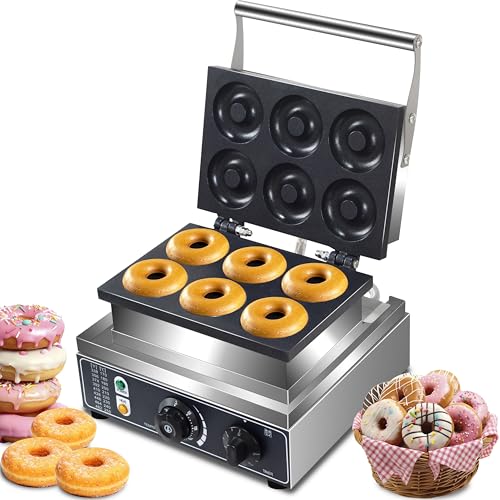
- 1600-watt dual-sided heating
- Adjustable temperature and one-to-five-minute timer
- Compact stainless-steel commercial build
Best For: Cafés and shops needing controlled electric baking
Compact Countertop Option

- Makes seven mini doughnuts per batch
- Fast-heating non-stick cooking surface
- Compact and lightweight for easy storage
Best For: Small kitchens, dorms, and modest family batches
Best Commercial Pick
VEVOR Automatic 4-Row Donut Machine

- About 240 pieces per hour
- Automated flipping and controls
- 3L hopper and 6.1L oil tank
Best For: Cafés, bakeries, and food stands with high-volume needs
Best Family Option
KEINVE 7-Slot Mini Donut Maker

- Makes seven mini doughnuts per cycle
- Four- to six-minute cooking time
- Compact non-stick design
Best For: Family breakfasts, snacks, and decorating sessions
Best Accessory Bundle

- Makes bite-sized 1.93-inch doughnuts
- Ready in about three minutes
- Includes piping bags and tools
Best For: Brunches, snacks, and mini-doughnut entertaining
Commercial High-Capacity Pick
FOHERE Automatic 4-Row Mini Donut Maker

- Automates the full mini-doughnut production process
- Produces up to 250 doughnuts per hour
- 304 stainless steel with temperature and safety controls
Best For: Bakeries, cafés, and other commercial kitchens
Home Batch Baking Pick
Baker’s Friend 12-Count Mini Donut Maker

- Makes 12 mini doughnuts per batch
- Uses cake, brownie, and other batters
- Nonstick surfaces simplify cooking and cleanup
Best For: Families, parties, and everyday home baking
Larger Home Doughnut Pick
Baker’s Friend 6-Cavity 3-Inch Maker

- Makes six larger 3-inch doughnuts per batch
- Ready-light indicators simplify operation
- Lightweight design with nonstick cleanup
Best For: Home bakers who prefer larger doughnuts
High-Capacity Home Pick – 23-Hole Mini Donut Maker
For shoppers comparing doughnut makers for large batches, this compact electric model stands out by making 23 mini doughnuts at once. Its fast heating, one-touch operation, and non-stick plates make it a practical choice for breakfasts, parties, bake sales, and small-scale food service.
Best For: Families, kids’ parties, busy breakfasts, and small commercial events needing many mini doughnuts quickly.
Pros:
- Makes up to 23 mini doughnuts per batch.
- Fast, even heating requires no flipping or rotating.
- Non-stick plates support easy release and cleanup.
- Compact, lightweight design suits home or small-business use.
Cons:
- Produces mini doughnuts rather than standard or large sizes.
- At 110 watts, it may be less suited to sustained heavy commercial production.
This is a particularly convenient batch maker when countertop space matters. It offers impressive per-batch capacity for a lightweight home appliance, though larger businesses may prefer a commercial fryer or higher-powered machine.
Commercial Production Powerhouse – Automatic Commercial Donut Fryer
Among doughnut makers for large batches, this VEVOR machine is built for serious output. Its 3000-watt system, automatic flipping, adjustable molds, and large hopper and oil tank are designed to support consistent production in cafés, bakeries, and food stands.
Best For: Commercial kitchens and food businesses that need automated, high-volume doughnut frying with multiple size options.
Pros:
- 3000 watts supports high production capacity.
- Automatic operation and flipping reduce hands-on labor.
- Three mold ranges accommodate mini, standard, and large doughnuts.
- 304 stainless-steel construction includes a 5.5-liter hopper and 14.5-liter oil tank.
Cons:
- At 61.7 pounds, it is substantially heavier than countertop home makers.
- Its large footprint requires dedicated commercial workspace.
- Frying with oil involves more setup and maintenance than electric baking.
This is the strongest fit for operators prioritizing throughput and flexibility over portability. The automatic controls and generous capacities can streamline service, while the size and commercial design make it excessive for occasional home use.
Controlled Commercial Baker – 6-Hole Commercial Donut Waffle Maker
This six-hole commercial maker offers a practical middle ground for businesses seeking doughnut makers for large batches without moving to an automatic fryer. Dual-sided 1600-watt heating, adjustable temperature, and a built-in timer help produce repeatable baked doughnuts during ongoing service.
Best For: Bakeries, cafés, restaurants, and snack shops that want controlled electric baking in a compact commercial format.
Pros:
- 1600-watt double-sided heating promotes fast, even baking.
- Temperature adjusts from 50°C to 300°C, with one- to five-minute timing.
- Non-stick baking surfaces support easy demolding and cleanup.
- Stainless-steel construction is compact and stable for commercial use.
Cons:
- Six cavities per batch means lower batch capacity than the 23-hole model.
- It is designed for baking rather than automated oil frying.
- Commercial construction may be more machine than occasional home users need.
Choose this model when recipe control and a compact footprint matter more than maximum cavity count. Its timer and broad temperature range offer useful consistency for commercial electric baking, while the six-hole layout may require more batches for peak demand.
Compact Countertop Option – Dash Express Mini Donut Maker
The Dash Express is a small, straightforward choice for shoppers who want doughnut makers for large batches relative to typical home baking, while still prioritizing easy storage. It makes seven mini doughnuts at a time and uses fast heating with a double-sided non-stick surface.
Best For: Small kitchens, dorm rooms, and households making modest batches of mini doughnuts for family and friends.
Pros:
- Compact footprint fits easily on a countertop.
- Fast heating produces mini doughnuts in minutes.
- Double-sided non-stick cooking surface aids release and cleanup.
- Lightweight 3.3-pound design is easy to store.
Cons:
- Makes only seven mini doughnuts per batch.
- Its single setting provides less control than commercial models.
- Lower batch capacity makes it less suitable for parties or business-scale output.
This is best viewed as a convenient personal or family appliance rather than a true high-volume machine. Its small size and simple operation are appealing, but shoppers serving large groups will need to run multiple batches.
Best Commercial Pick – VEVOR Automatic 4-Row Donut Machine
For businesses comparing doughnut makers for large batches, the VEVOR automatic machine prioritizes output and consistency. Its four rows, automated flipping, and stated capacity of about 240 pieces per hour make it suited to cafés, bakeries, and food stands.
Best For: Commercial operators needing high-volume ring doughnut production with less hands-on work.
Pros:
- Produces approximately 240 doughnuts per hour using four rows.
- Automated operation and flipping help streamline consistent cooking.
- 304 stainless-steel construction, a 3L hopper, and a 6.1L oil tank support busy service.
- Makes uniform ring doughnuts about 50 mm wide and 25 mm thick.
Cons:
- Its 33.1-pound commercial design takes substantially more space than home models.
- The 1,750-watt, 120-volt setup is intended for a dedicated high-output workspace.
Choose this model when throughput matters more than compactness. The larger hopper and oil tank reduce interruptions, while intelligent controls simplify production for a team.
Best Family Option – KEINVE 7-Slot Mini Donut Maker
Among doughnut makers for large batches at home, the KEINVE offers a simple way to prepare repeated rounds of mini doughnuts without taking over the kitchen. It bakes up to seven at a time in roughly four to six minutes and has non-stick plates for easier release.
Best For: Families making small batches of mini doughnuts for breakfasts, snacks, and decorating activities.
Pros:
- Bakes up to seven mini doughnuts per cycle in about four to six minutes.
- Non-stick plates help doughnuts release with less cleanup.
- Compact 8.95-by-7.37-by-4.23-inch design suits smaller kitchens.
- Supports homemade treats that can be customized with icing and sprinkles.
Cons:
- Seven-slot capacity is better for family batches than commercial-scale production.
- It makes mini doughnuts rather than standard full-size doughnuts.
This is a practical choice for occasional home baking, especially when compact storage and easy cleanup are more important than maximum throughput.
Best Accessory Bundle – DSP Mini Donut Maker
The DSP Mini Donut Maker is a compact option for shoppers seeking doughnut makers for large batches of bite-sized treats or entertaining. It reaches cooking temperature in about three minutes and includes piping bags plus several basic decorating and handling tools.
Best For: Snack tables, brunches, and home bakers who want a mini-doughnut maker with useful accessories included.
Pros:
- Designed for approximately 1.93-inch bite-sized mini doughnuts.
- Includes 100 piping bags, a spatula, whisk, tongs, and cooking brush.
- Ready to bake in about three minutes, with red and green indicator lights.
- Non-stick coating and a wipe-clean stainless-steel-and-plastic body simplify maintenance.
Cons:
- The very small doughnut size may not suit shoppers wanting standard doughnuts.
- Its compact format is intended for home snacks and entertaining rather than commercial-scale output.
- The included accessories add convenience but do not increase the maker’s stated cooking capacity.
The DSP stands out as a ready-to-use entertaining kit. Pick it for small, decorative treats and fast warm-up rather than industrial production volume.
Commercial High-Capacity Pick – FOHERE Automatic 4-Row Mini Donut Maker
For bakeries, cafés, and dessert shops comparing doughnut makers for large batches, the FOHERE is the most production-focused option here. Its automatic forming, frying, flipping, collecting, counting, and output functions are designed to streamline mini-doughnut production, with a stated capacity of up to 250 doughnuts per hour.
Best For: Commercial kitchens and food-service businesses that need automated, high-volume mini-doughnut production.
Pros:
- Automates forming, frying, flipping, collecting, counting, and outputting.
- Four-row design and 3L hopper support up to 250 mini doughnuts per hour.
- 304 food-grade stainless steel construction is durable and easy to clean.
- Includes adjustable frying speed, temperature control, overheating protection, and a double-switch safety feature.
Cons:
- Its commercial size, 1750W power, and 35.2-pound weight may be excessive for home use.
- Requires oil in the tank before operation.
- Produces 40 mm mini doughnuts rather than larger doughnuts.
The FOHERE stands out when throughput and automation matter more than compact countertop convenience. Its stainless-steel build and safety controls add practical value for frequent professional use, though buyers should account for the machine’s oil-based operation and substantial footprint.
Home Batch Baking Pick – Baker’s Friend 12-Count Mini Donut Maker
If you want doughnut makers for large batches at home, the Baker’s Friend 12-count model offers a practical middle ground. It bakes 12 mini doughnuts at once in just a few minutes, making it useful for family breakfasts, parties, and snack preparation without the size or complexity of commercial equipment.
Best For: Families, hosts, and home bakers who want multiple mini doughnuts per cooking cycle.
Pros:
- Bakes 12 mini doughnuts per batch.
- Works with cake mix, brownie mix, and other batters.
- Double-sided PFOA-free nonstick surfaces support even cooking and easier cleanup.
- Compact 12-by-11-by-2.75-inch design uses relatively little counter space.
Cons:
- It is intended for home use rather than commercial-scale production.
- Creates mini doughnuts, so it may not suit shoppers seeking standard-size treats.
- The supplied details do not list adjustable temperature settings.
This model is a sensible choice for repeated home batches when convenience and cleanup are priorities. Its 12-doughnut capacity is more useful for groups than a single-serving appliance, while the compact design keeps it approachable for everyday kitchen use.
Larger Home Doughnut Pick – Baker’s Friend 6-Cavity 3-Inch Maker
For shoppers seeking doughnut makers for large batches but preferring larger individual treats, this Baker’s Friend model makes six 3-inch doughnuts per cycle. Its plug-in operation, ready-to-bake indicator, and nonstick coating make it a straightforward choice for brunches, parties, and family baking.
Best For: Home users who prefer larger 3-inch doughnuts over smaller mini-doughnut portions.
Pros:
- Makes six larger 3-inch doughnuts per batch.
- Red and green indicator lights show power and baking readiness.
- Nonstick coating supports quick wipe-down cleanup.
- Lightweight 3.8-pound design is easy to handle and store.
Cons:
- Six doughnuts per cycle means lower batch quantity than the 12-count mini-doughnut model.
- Its single setting offers less control over baking customization.
- Designed for home use, not commercial-volume production.
The main advantage here is portion size: six 3-inch doughnuts can feel more substantial than mini versions. Choose it when larger individual doughnuts matter more than maximizing the number baked in each cycle, and when simple operation is preferable to extensive controls.
How We Picked the Best Doughnut Makers for Large Batches
We focused on the factors that matter most when producing multiple batches: stated capacity, heating performance, cooking format, controls, construction, and ease of cleaning. The selection includes home-friendly machines for repeated small batches alongside commercial automatic fryers built for substantially higher output.
Because listed capacities can vary by doughnut size, recipe, and operating conditions, treat manufacturer output claims as a comparison point rather than a guarantee. For commercial use, also verify electrical requirements, ventilation, food-safety certifications, warranty coverage, and replacement-part availability.
Quick Comparison
| Best For | What to Prioritize | Recommended Type |
|---|---|---|
| Family breakfasts and snacks | Simple controls, compact storage, nonstick plates | Mini electric baker |
| Frequent home entertaining | Larger plate capacity and fast reheating | Six- to 12-cavity maker |
| Small cafés or food stalls | Consistent output, durable construction, easy loading | Commercial automatic machine |
| High-volume production | Rows per cycle, hourly throughput, hopper size | Multi-row fryer or automatic maker |
Key Buying Factors for Doughnut Makers for Large Batches
Capacity and Throughput
Look beyond the number of cavities. A seven-cavity baker may be convenient for home use, while a commercial four-row machine can produce far more with less manual handling. Compare pieces per cycle, estimated hourly output, and how quickly the unit recovers heat between batches.
Machine Type
Electric mini makers bake batter in nonstick molds and are generally simpler, cleaner, and easier to use indoors. Automatic commercial models may fry doughnuts and include hoppers, conveyors, or automatic turning features. Choose the format that matches your recipe, texture preference, and production environment.
Controls and Consistency
Adjustable temperature, reliable timers, and automatic controls help reduce variation during long production runs. For occasional use, straightforward indicator lights may be preferable to a more complex control panel.
Construction and Cleanup
Nonstick cooking surfaces make release and cleanup easier, but they still require appropriate utensils and gentle washing. Stainless steel commercial bodies are better suited to frequent use. Check whether plates, trays, and oil-contact components are removable or easy to access.
Space and Power
Measure the counter, storage, and ventilation area before buying. High-wattage commercial equipment may need a dedicated circuit, while compact home machines are easier to plug in and move. Confirm voltage and plug specifications before ordering.
Who Should Buy Which Doughnut Makers for Large Batches?
Choose a compact mini maker if you want quick breakfasts, children’s snacks, or occasional entertaining with minimal setup. A model with six to 12 cavities is a practical middle ground for repeated home batches.
Choose a commercial single-row machine if you need more consistent production than a countertop baker provides but have limited space or moderate demand.
Choose a four-row automatic machine for cafés, market vendors, catering operations, and other users who value high throughput and reduced manual work. These machines cost more and require careful attention to power, cleaning, oil management, and safety.