Choose a gift that matches what the recipient already loves to explore: building, observing nature, solving puzzles, or learning a new skill. This collection includes options for solo discovery and shared family activities.
Educational Gifts for Curious Learners
1. TOMLOV DM301 Pro Digital Microscope
For Close-Up Discoveries
TOMLOV DM301 Pro Digital Microscope

- Shows specimens on a 7-inch display with adjustable viewing angle.
- Includes prepared and blank slides for observation activities.
- Connects to a TV, laptop, or phone for viewing and sharing.
Best For: Children and teens curious about biology and close-up observation.
2. MEEZAA 80mm Beginner Telescope
For Backyard Stargazing
MEEZAA 80mm Beginner Telescope
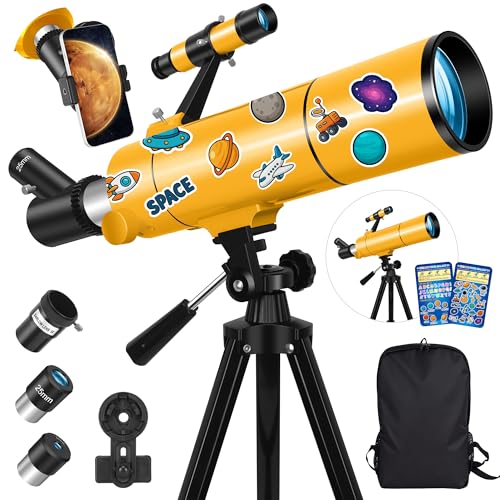
- Includes two eyepieces, a 3× Barlow lens, and a finder scope.
- The adjustable tripod and backpack support outdoor observing.
- A phone adapter lets users capture images and video.
Best For: Young astronomy enthusiasts and families who enjoy stargazing.
3. EISCO 9-Piece Chemistry Glassware Set
For Hands-On Chemistry
EISCO 9-Piece Chemistry Glassware Set

- Includes three beakers, three flasks, and three graduated cylinders.
- Glassware is made from borosilicate 3.3 glass.
- A fitted foam case supports storage and transport.
Best For: Teen or adult learners doing supervised science activities.
4. EVOTECH 15-Piece Human Anatomy Model
For Learning Anatomy
EVOTECH 15-Piece Human Anatomy Model

- Removable parts include the heart, lungs, brain, and other organs.
- Comes with a colorful educational brochure.
- The model has a wood base and portable size.
Best For: Students interested in biology, nursing, or human anatomy.
5. Replogle Illuminated Raised-Relief Globe
For Map Explorers
Replogle Illuminated Raised-Relief Globe

- The 12-inch globe illuminates and has raised relief texture.
- Political boundaries and thousands of place names appear on the map.
- A walnut-colored hardwood base supports the globe.
Best For: Children learning geography and people who enjoy exploring maps.
6. Snap Circuits Classic SC-300 Kit
For First Circuit Builds
Snap Circuits Classic SC-300 Kit

- The kit supports more than 300 electronics projects.
- Color-coded pieces snap onto a grid without soldering or tools.
- The project ideas include radios, alarms, and doorbells.
Best For: Children ages 8 and up who enjoy building and basic electronics.
7. National Geographic Hobby Rock Tumbler Kit
For Polished Stone Projects
National Geographic Hobby Rock Tumbler Kit
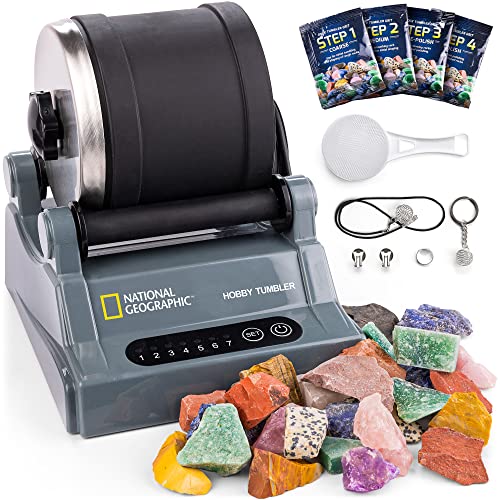
- Includes a tumbler, four polishing grits, and nine types of rough gemstones.
- A learning guide accompanies the tumbling materials.
- One-touch settings include a timer and automatic shutoff.
Best For: Patient young hobbyists interested in geology and collecting stones.
8. AcuRite Wireless Home Weather Station
For Everyday Weather Watching
AcuRite Wireless Home Weather Station
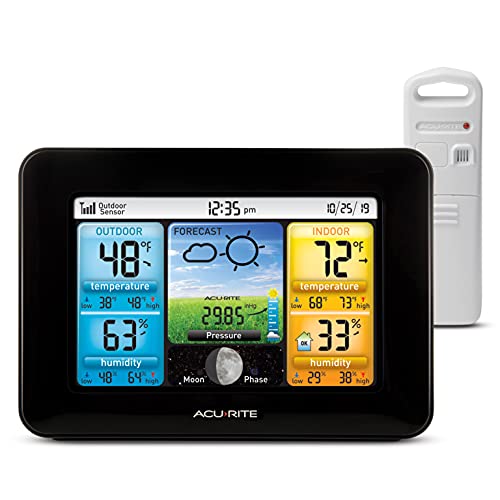
- The display shows indoor and outdoor temperature and humidity.
- A wireless sensor relays local conditions to the display.
- Forecast icons, trend arrows, and moon phase add context.
Best For: Families and students interested in local weather patterns.
9. Celestron Nature DX 8×42 Binoculars
For Outdoor Observation
Celestron Nature DX 8x42 Binoculars

- Eight-power magnification supports viewing birds and distant landscapes.
- Waterproof construction and rubber-armored housing suit outdoor use.
- The binoculars can attach to a tripod with an adapter, sold separately.
Best For: Nature-loving students and families who enjoy wildlife watching.
10. Makeblock mBot Coding Robot Kit
For Building and Coding
Makeblock mBot Coding Robot Kit

- The kit introduces electronics, robotics, and programming.
- Lessons and apps support learning with Scratch and Arduino.
- The robot can follow lines, avoid obstacles, and be remote controlled.
Best For: Children ages 8–12 who enjoy engineering and coding projects.
11. National Geographic Mega Science Lab
For a Range of Experiments
National Geographic Mega Science Lab
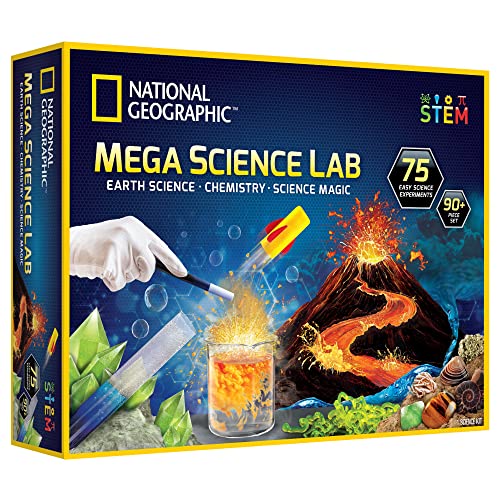
- Includes 45 activities plus a guide to 30 additional experiments.
- Topics include Earth science, chemistry, and science magic.
- Activities include volcano building, crystal growing, and bubbling reactions.
Best For: Children ages 8 and up who like trying varied science activities.
12. Spanish Vocabulary Cards and Web Learning
For Beginning Spanish Practice
Spanish Vocabulary Cards and Web Learning

- The 276 double-sided cards cover 720 Spanish and English words.
- Illustrations and phonetic guides support beginner study.
- A web portal includes audio, quizzes, and typing games.
Best For: Students or adults starting to learn Spanish.
13. PicassoTiles 100-Piece Magnetic Tiles
For Open-Ended Building
PicassoTiles 100-Piece Magnetic Tiles

- One hundred magnetic pieces support 3D building and shape play.
- Building activities introduce colors, shapes, counting, and magnetic polarity.
- The tiles are designed for individual or group play.
Best For: Children ages 3 and up who enjoy constructing shapes and structures.
14. National Geographic 300+ Rock Collection
For a Growing Geology Collection
National Geographic 300+ Rock Collection

- Includes more than 300 rock, mineral, and crystal specimens.
- Two geodes can be opened to reveal crystal interiors.
- A learning guide, magnifying glass, and storage bag are included.
Best For: Children curious about geology, crystals, and natural specimens.
15. Coogam Wooden Hexagon Puzzle
For Pattern and Logic Challenges
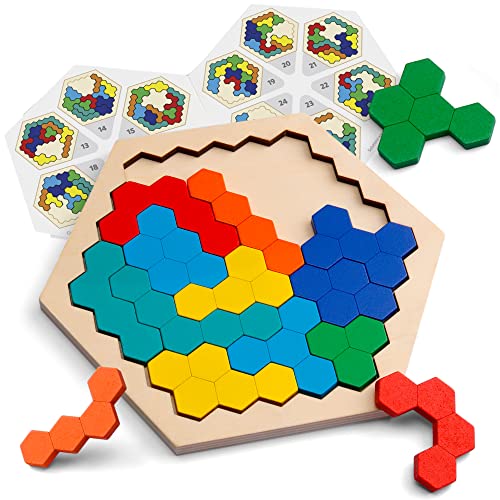
- Fourteen colored wooden pieces form a tabletop shape puzzle.
- An instruction sheet offers starting guidance, with room to find more patterns.
- Arranging the pieces exercises spatial thinking and coordination.
Best For: Children and adults who enjoy brain teasers and geometric patterns.
16. ROKR 3D Wooden Vitascope Model Kit
For a Mechanical Build
ROKR 3D Wooden Vitascope Model Kit

- The assembly kit has about 183 wooden parts and instructions.
- Turning the handle shows classic film clips without batteries or cables.
- The assembled model is designed for display as well as building.
Best For: Teens and adults who enjoy detailed construction and mechanisms.
17. Learning Resources Money Bags Math Game
For Learning Money Basics
Learning Resources Money Bags Math Game
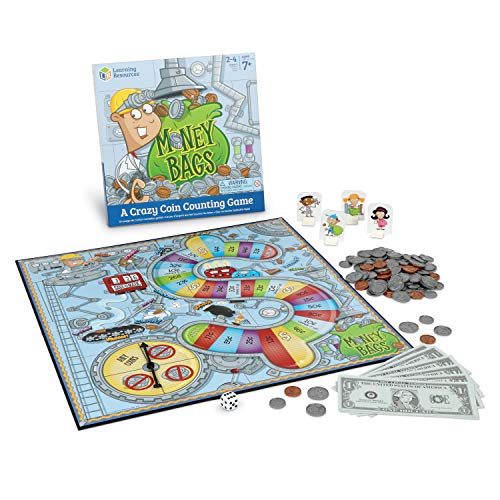
- Players practice counting, sorting, and comparing money values.
- The game includes a board, coins, play bills, markers, and a die.
- Designed for two to four players, it takes about 30 minutes to play.
Best For: Families introducing children to counting and everyday money concepts.
Choosing an Educational Christmas Gift
Start with the recipient’s interests and the kind of activity they are likely to return to. A child who asks questions about rocks may get more from a specimen collection or tumbler than from a broad science kit. A budding astronomer may prefer a telescope that invites repeat observation, while someone who likes puzzles may enjoy a compact wooden challenge they can pick up at any time.
Consider how the gift will be used. Some options encourage independent exploration, such as vocabulary cards, a hexagon puzzle, or the anatomy model. Others naturally bring people together: magnetic tiles, the Money Bags game, binoculars for a walk, or a family stargazing session. For gifts intended for a classroom or homeschool setting, look at whether the product includes a guide, project instructions, or pieces that support several activities.
Match the Budget to the Experience
Educational gifts can be simple or involved. A puzzle or card set offers a focused activity without requiring a large setup. Collections and experiment kits create a larger supply of things to inspect or try. A microscope, telescope, weather station, or robot can become a continuing hobby, so consider both the initial gift and the space, supplies, or attention the recipient will need to make use of it.
For younger children, an approachable activity with clear instructions can be more satisfying than a complicated project. For older children and adults, choose a gift with room to progress: the robot introduces coding steps, the telescope supports different types of viewing, and the wooden model takes patience to assemble. The glassware set is most appropriate when an adult can help plan safe, supervised activities.
Check Compatibility and Personalization
Before choosing a technology-based gift, check the recipient’s available devices and power needs. The microscope lists phone, computer, tablet, and television compatibility; the telescope includes a phone adapter for capturing views. The mBot uses batteries, and its remote controller battery is not included. The weather station also requires two AA batteries for its outdoor sensor. These small details can shape whether the gift is ready to use when opened.
Personal interests can guide the choice too. A map lover may appreciate an illuminated globe, while someone who likes collecting may prefer rocks they can identify and display. Language learners may value the mix of physical cards and online practice. For a shared family gift, look for something that naturally invites conversation, collaboration, or taking turns.
Plan Timing and Last-Minute Decisions
Start with the activity, then consider setup time. A puzzle or board game is easy to bring into a holiday gathering. A microscope or experiment kit may benefit from a quiet place to explore, while a telescope works best when there is a clear opportunity to look at the sky. A mechanical model is a longer project, so it suits someone who enjoys settling in for an extended build.
For a last-minute decision, favor gifts with a clear first step: arrange a puzzle, choose a vocabulary card, inspect a mineral, or play a round of a math game. If the gift involves devices, batteries, or a multi-hour assembly, review the included materials and notes before choosing. A thoughtful educational Christmas gift does not need a seasonal design; it can be an ordinary, useful object that gives the recipient a reason to keep learning long after the holiday.