Finding the best pressure canner for small batches means balancing capacity, control, storage, and the type of foods you plan to preserve. A smaller or more adaptable model can help reduce wasted space and make occasional canning less cumbersome.
This roundup compares 10 pressure canners and cookers, from compact stovetop options to digitally controlled electric models and larger canners that remain useful when a harvest is more substantial.
Best 10 Pressure Canners for Small Batches Picks for 2026
Best Gasket-Free Pick

- Holds about 7 pint or 4 quart jars
- Gasket-free metal-to-metal seal
- Works on gas, electric, and flat-top stoves
Best For: Modest stovetop batches and long-term durability
Best Automated Option

- Automatic sensor maintains canning temperature
- Digital display guides each step
- Supports pressure and boiling-water canning
Best For: Guided electric canning with less manual monitoring
Best Lightweight Manual Pick

- Lightweight 8.9-pound aluminum body
- Works across several stovetop types
- Includes gauge, rack, and blockage guard
Best For: Portable manual canning with flexible stovetop compatibility
Best High-Capacity Value

- Supports pressure and water-bath canning
- Holds up to 24 half-pint jars
- Includes two racks and a canning guide
Best For: Flexible canning with room for larger batches
Large-Batch Classic
Presto 01781 23-Quart Pressure Canner

- Pressure and boiling-water canning in one pot
- Fits up to 26 half-pints, 20 pints, or 7 quarts
- Works on regular and smooth-top ranges
Best For: Canners who want flexibility for both small and large projects
Compact Stovetop Pick
5.3-Quart Pressure Cooker and Canner
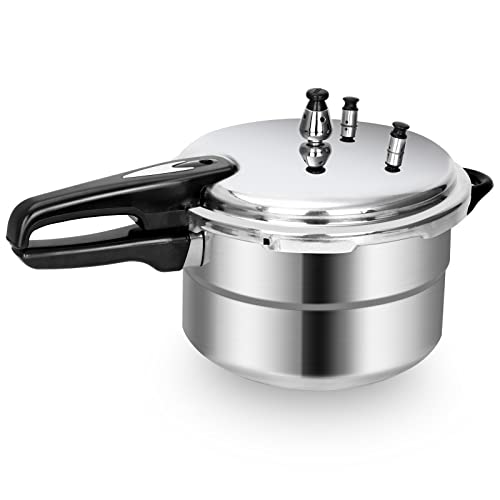
- Compact size for small households and kitchens
- 10 PSI operation with included canning rack
- Compatible with induction and other stovetops
Best For: Couples and apartment kitchens handling modest batches
Adjustable Pressure Choice
Granite Ware 20-Quart Pressure Canner

- 5, 10, and 15 PSI regulator settings
- Hard-anodized aluminum resists rust and staining
- Functions as a canner, cooker, and steamer
Best For: Canners who value adjustable pressure settings
Best Electric Pick
NESCO NPC-9 Smart Electric Pressure Canner
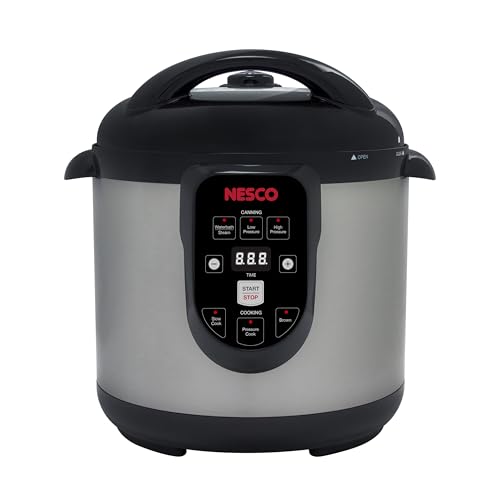
- Automatic pressure and temperature regulation
- Digital presets for repeatable cycles
- Includes canning and steam racks
Best For: Electric, multifunction canning with minimal manual monitoring
Best Capacity Value
Presto 01755 16-Quart Aluminum Canner

- Generous 16-quart capacity
- Lightweight aluminum construction
- Simple manual operation
Best For: Traditional stovetop-style canning with extra batch capacity
Best Compact Manual Option
Granite Ware 12-Quart Pressure Canner

- Holds multiple quart, pint, or half-pint jars
- Adjustable 5, 10, and 15 psi settings
- Works as a pressure cooker and steamer
Best For: Compact manual canning with elevation-adjustable pressure
Best Gasket-Free Pick – All American 910
The All American 910 is a compact option among pressure canners for small batches, holding approximately seven pint jars or four quart jars. Its manual design works on gas, electric, and flat-top stoves, while the metal-to-metal seal avoids a replaceable gasket.
Best For: Canners who want a durable, stovetop-compatible model for modest batches and long-term use.
Pros:
- Holds approximately seven pint jars or four quart jars.
- Metal-to-metal sealing system requires no gasket.
- Includes two canning racks, a pressure gauge, and a recipe and instruction book.
- Cast aluminum construction is made in the USA.
Cons:
- Manual operation requires monitoring during processing.
- Its 10.5-quart capacity is smaller than the other listed models.
- At 11.5 pounds, it may still be substantial for storage.
Choose this model when a gasket-free closure and smaller capacity matter more than automation or maximum batch size. It is a straightforward fit for regular stovetop canning in limited quantities.
Best Automated Option – Presto 02152 Digital
The Presto 02152 brings automated controls to pressure canners for small batches while retaining a 17-quart capacity for quart jars. Its sensor maintains the required temperature, and the digital display guides users through the selected canning method and processing time.
Best For: Beginners and busy home canners who prefer electric, guided operation over manual stovetop monitoring.
Pros:
- Sensor automatically maintains the exact canning temperature.
- LED digital display and control knob guide operation.
- Supports both pressure canning and boiling-water canning.
- Requires no high-altitude pressure adjustments according to the supplied notes.
Cons:
- At 24.3 pounds, it is the heaviest model in this group.
- Its 17-quart size may be more capacity than needed for very small batches.
- Requires a 120-volt electrical outlet.
This is the most convenient choice here if automated temperature control and guided settings are priorities. Its larger electric format is less suited to shoppers seeking a compact, lightweight canner.
Best Lightweight Manual Pick – NESCO MPC-16QT
The NESCO MPC-16QT offers a middle-ground capacity for pressure canners for small batches, with a 16.9-quart aluminum body and included canning rack. It is a manual stovetop model with a pressure gauge, locking lid, sealing ring, and removable blockage guard.
Best For: Shoppers seeking a lighter manual canner with straightforward pressure controls and broad stovetop compatibility.
Pros:
- Heavy-gauge, rust-proof polished aluminum construction.
- Works on gas, sealed electric, ceramic, and electric-coil stovetops.
- Includes a canning rack and easy-to-read pressure indicator.
- Locking lid and removable blockage guard add practical safety features.
Cons:
- Manual operation requires hands-on pressure monitoring.
- Uses a sealing ring that may eventually require replacement.
- The supplied notes do not specify jar capacity by pint or quart.
With a listed weight of just 8.9 pounds, the NESCO is appealing when portability and flexible stovetop use matter. Consider it a practical manual alternative, provided its unspecified jar capacity fits your batch plans.
Best High-Capacity Value – T-fal 22-Quart
The T-fal 22-quart pressure canner is sized for shoppers who want pressure canners for small batches but also need room to scale up. It supports pressure and water-bath canning, includes two racks and a guide, and offers three pressure settings for manual control.
Best For: Home canners who want flexible processing options and substantial capacity for occasional larger harvests.
Pros:
- Supports pressure canning for low-acid foods and water-bath canning for high-acid foods.
- Holds up to 24 half-pint, 16 wide-mouth pint, 18 pint, or 7 quart jars per batch.
- Includes two canning racks and a step-by-step canning guide.
- Features three PSI settings, a locking lid, and an easy-to-read gauge.
Cons:
- Its 22-quart capacity may be oversized for consistently small batches.
- Manual operation requires monitoring pressure and processing time.
- The supplied notes list compatibility with gas and electric-coil cooktops, not flat-top stoves.
The T-fal stands out for versatility and clearly specified jar capacity. It makes the most sense if small-batch needs may grow or if you want one appliance for both pressure and water-bath canning.
Large-Batch Classic – Presto 01781 23-Quart Pressure Canner
For shoppers comparing pressure canners for small batches, the Presto 01781 is worth considering if you also want room to scale up. Its 23-quart aluminum body handles pressure canning, boiling-water canning, and everyday pressure cooking, though its extra-large capacity may be more than needed for very small runs.
Best For: Home canners who want one versatile appliance for occasional small batches and larger preservation projects.
Pros:
- Supports pressure canning of vegetables, meats, poultry, and seafood, plus boiling-water canning for fruits, jams, jellies, pickles, and salsa.
- Large capacity accommodates up to 26 half-pints, 20 pints, or 7 quarts.
- Works on regular and smooth-top ranges and includes a canning rack, instruction book, and 12-year limited warranty.
- Deluxe pressure dial gauge measures the full processing-pressure range, including higher-altitude needs.
Cons:
- The 23-quart size takes up more storage space than a compact small-batch canner.
- Its aluminum construction may not suit shoppers specifically seeking stainless steel cookware.
The Presto is a flexible choice when “small batches” are only part of your canning routine. Choose it for capacity and versatility rather than a compact footprint.
Compact Stovetop Pick – 5.3-Quart Pressure Cooker and Canner
This 5.3-quart stovetop model is tailored to shoppers seeking pressure canners for small batches in a compact kitchen. It combines pressure cooking and canning, includes a rack, and is designed for gas, electric, ceramic, and induction stovetops.
Best For: Couples, small families, and apartment cooks who want a compact manual cooker for everyday meals and smaller canning projects.
Pros:
- Compact 5.3-quart capacity is sized for small households and limited counter or storage space.
- Designed to maintain 10 PSI and includes a rack for steaming and canning.
- Induction-compatible base works across gas, electric, ceramic, and induction cooktops.
- Triple protection includes a pressure regulator valve, safety valve, and self-locking lid.
Cons:
- Its 10 PSI setting offers less pressure flexibility than models with multiple regulator settings.
- The smaller capacity is less suitable for large canning loads.
- As a manual stovetop model, it does not offer digital controls.
With its smaller footprint and multi-stovetop compatibility, this cooker is a practical match for modest batches. Verify that its 10 PSI operating specification fits your intended preservation instructions.
Adjustable Pressure Choice – Granite Ware 20-Quart Pressure Canner
The Granite Ware 20-quart Pressure Canner/Cooker/Steamer offers a middle ground for pressure canners for small batches: it has meaningful capacity without being the largest option in this group. Its adjustable three-piece regulator provides 5, 10, and 15 PSI settings for more pressure flexibility.
Best For: Home preservers who want adjustable pressure settings and a canner that also steams and pressure-cooks.
Pros:
- Three-piece pressure regulator is calibrated at 5, 10, and 15 PSI.
- Heavy-gauge hard-anodized aluminum is designed for strength and resistance to rust or staining.
- Combines pressure canning, pressure cooking, and steaming in a 20-quart vessel.
- Its 20-quart capacity offers room for small or moderate canning loads.
Cons:
- The 20-quart body may still be bulky for kitchens dedicated only to very small batches.
- It is a manual stovetop appliance rather than an electronic model.
The Granite Ware model stands out for pressure-setting flexibility and durable hard-anodized aluminum construction. It is a sensible option when you want small-batch capability without giving up adjustable PSI choices.
Best Electric Pick – NESCO NPC-9 Smart Electric Pressure Canner
For pressure canners for small batches, the NESCO NPC-9 offers automated operation in a compact 9.5-quart format. Its digital presets, built-in pressure regulation, and included racks are useful when you want repeatable canning without manually monitoring a stovetop gauge.
Best For: Home cooks who want an electric canner for vegetables, meats, broths, sauces, and occasional cooking tasks.
Pros:
- Automatic pressure and temperature regulation reduces manual guesswork.
- Digital controls and preset programs support repeatable cycles.
- Includes canning and steam racks plus a removable condensation catcher.
- Also functions as a pressure cooker, slow cooker, steamer, and water-bath appliance.
Cons:
- At 22 pounds and over 16 inches tall, it requires substantial storage space.
- The 9.5-quart capacity may be limiting for larger preservation sessions.
This is the most convenient option of the three for users who prioritize digital controls and multifunction cooking. It is a practical fit for smaller, repeatable batches when countertop space and appliance weight are acceptable.
Best Capacity Value – Presto 01755 16-Quart Aluminum Canner
The Presto 01755 is a straightforward manual choice among pressure canners for small batches, with a 16-quart aluminum body that leaves room for processing more jars when needed. Its simple hand-controlled design suits cooks who prefer traditional stovetop-style canning equipment.
Best For: Budget-conscious home preservers who want a larger-capacity aluminum pressure canner for meats, fish, jams, and jellies.
Pros:
- 16-quart capacity provides more batch room than the smaller models here.
- Warp-resistant aluminum construction is relatively lightweight at 10.5 pounds.
- Manual operation keeps the design uncomplicated.
- Includes an air vent and cover lock for added operating security.
Cons:
- Manual controls require more hands-on attention than an electric canner.
- Its larger capacity may be more than necessary for truly small preservation batches.
The Presto is a sensible option if capacity and a traditional manual format matter more than automation. Its lightweight aluminum construction also makes it easier to move and store than the heavier electric model.
Best Compact Manual Option – Granite Ware 12-Quart Pressure Canner
Granite Ware F0732-2 Pressure Canner and Cooker/Steamer, 12-Quart, Black by Granite Ware
Check Price On AmazonThe Granite Ware F0732-2 balances a smaller 12-quart size with flexible pressure settings, making it a useful contender among pressure canners for small batches. Its adjustable 5, 10, and 15 psi controls are designed for different elevations, while the same unit can also pressure-cook or steam.
Best For: Small-batch canners who want a compact manual appliance with adjustable pressure and steaming capability.
Pros:
- Holds four quart jars, seven pint jars, or eight half-pint jars.
- Adjustable 5, 10, and 15 psi settings accommodate different elevations.
- Fail-safe weight control helps regulate pressure without constant gauge monitoring.
- Can be used as both a pressure cooker and steamer.
Cons:
- Manual operation does not provide the convenience of digital presets.
- The 12-quart capacity is smaller than the Presto’s 16-quart capacity.
This Granite Ware model is a strong middle ground for users who want defined jar capacity and adjustable pressure in a relatively compact format. It is especially appealing when elevation flexibility and multipurpose use are priorities.
How We Picked These Pressure Canners for Small Batches
We focused on features that matter for home preserving rather than capacity alone: usable batch size, pressure control, lid and locking design, heat-source compatibility, included racks or accessories, cleanup, and storage. The selection includes stovetop and electric models so shoppers can match the canner to their kitchen setup and preferred workflow.
Because pressure canning involves low-acid foods and requires tested procedures, we also considered whether each design offers clear operating controls, an accessible pressure gauge or digital interface, and practical guidance for new users. Always follow the manufacturer’s instructions and current tested canning recipes from a trusted extension service or food-safety authority.
Quick Comparison
- Compact stovetop choices: Smaller models are easier to store and can suit households preserving a few jars at a time.
- Mid-size manual canners: These offer a useful balance of batch capacity, familiar controls, and relatively simple maintenance.
- Large-capacity options: Twenty-quart-plus models make more sense for gardens, frequent canning, or larger families, but require more storage and handling space.
- Electric canners: Digital models can simplify temperature and pressure management, provided their approved uses match your recipes and altitude.
Key Buying Factors for Pressure Canners for Small Batches
Capacity and Jar Fit
Check the manufacturer’s stated capacity and the jar sizes it supports. A large pot may still be practical if you regularly preserve several types of food, but it can be unnecessarily bulky for occasional small batches. Confirm that the included rack keeps jars elevated and separated as required.
Pressure Control and Altitude
Manual canners commonly use a dial gauge, weighted regulator, or selectable pressure settings. Choose a system you can read and adjust confidently, and verify altitude instructions before processing. A pressure cooker is not automatically suitable for pressure canning unless the manufacturer specifically approves it.
Stovetop Compatibility
Aluminum models are often lightweight and heat quickly, while stainless-steel designs may provide broader cooktop compatibility and greater resistance to staining. Induction users should confirm that the base is explicitly compatible; not every aluminum canner will work on induction.
Safety, Maintenance, and Storage
Look for secure locking, clear pressure-release instructions, an accessible vent, and replaceable sealing components. Removable blockage guards and easy-to-clean interiors can simplify maintenance. Measure cabinet and stovetop space before buying, especially for wide 20- or 23-quart models.
Who Should Buy Which Pressure Canners for Small Batches?
Choose a compact stovetop model if you preserve occasionally, have limited storage, or typically process only a few jars. Choose a mid-size manual canner if you want straightforward controls and flexibility for regular home use. Choose a large-capacity canner if you process garden harvests in volume and have adequate lifting and storage space. Choose an electric model if simplified controls and a self-contained appliance are more important than stovetop versatility.
Whichever option you select, prioritize a canner that fits your jars, cooking surface, recipes, and available workspace. Correct processing time, pressure, altitude adjustments, and cooling procedures matter as much as the appliance itself.