Finding the right proofing setup can make sourdough, pizza, and enriched dough easier to manage—especially when counter space is limited. The best bread proofing boxes for small kitchens balance temperature control, usable capacity, storage, and cleanup.
This roundup compares 10 options, from compact stackable containers to foldable electric proofers, so you can choose a setup that fits both your baking routine and available space.
Best 10 Bread Proofing Boxes for Small Kitchens Picks for 2026
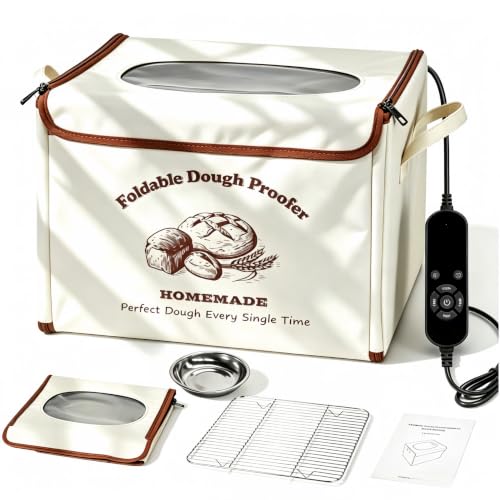
Best Foldable Temperature-Controlled Proofer

- 50–113°F temperature range with 48-hour timer
- Folds flat and offers front or top viewing
- Includes rack and five-layer insulation
Best For: Small kitchens and controlled single-batch fermentation
Best Stackable Tray Set

- Three BPA-free lidded containers
- Vented covers help retain moisture
- Stackable and refrigerator/freezer safe
Best For: Batch pizza dough storage and refrigerator proofing
Best Large-Capacity Foldable Proofer

- Fits multiple jars, a half-sheet pan, or two baskets
- 68–122°F control with 48-hour timer
- Three-sided heating and six-layer insulation
Best For: Bulk fermentation and family-size baking
Best Fridge-Friendly Dough Storage

- Two trays hold up to six dough balls each
- Stackable BPA-free plastic design
- Dishwasher-safe and multipurpose
Best For: Refrigerated pizza dough and portioned fermentation
Best Complete Kit
Cozy Bread Proofing Mat & Insulation Box

- Thermostat-controlled warming
- Includes insulated proofing box
- Compact and easy to store
Best For: Home bakers wanting a ready-to-use sourdough setup
Best for Batch Pizza Dough
Stackable Pizza Dough Proofing Box

- Fits up to six dough balls
- Stackable with or without lids
- Includes labels and erasable markers
Best For: Home pizza makers managing multiple dough portions
Best Foldable Proofer
PID-Controlled Dough Proofing Box
- 70°F–122°F adjustable temperature range
- 1–24-hour timer and PID control
- Folds to just 45mm for storage
Best For: Small kitchens needing programmable, precise proofing
Best Compact Dough Container
Brod & Taylor 6L Proofing Containers

- Two stackable 6L containers
- Marked walls track dough rise
- Dishwasher- and freezer-friendly
Best For: Small-kitchen bakers wanting simple, space-saving dough fermentation
Best Heated Starter Proofer

- 50–130°F adjustable temperature
- 24-hour timer with audible alarm
- Folds flat for storage
Best For: Apartment bakers needing controlled warmth for dough or starter
Best Foldable Temperature-Controlled Proofer – Compact Bread Proofing Box
For bakers seeking bread proofing boxes for small kitchens, this foldable GIYUDOT model combines a compact footprint with active temperature control. Its 50–113°F range, 48-hour timer, viewing-window options, and flat-folding design make it practical for controlled fermentation without permanent counter space.
Best For: Small kitchens, sourdough starters, single proofing bowls, and bakers who want controlled fermentation for bread, pizza dough, yogurt, or kombucha.
Pros:
- Folds flat for easier storage when not in use.
- Offers adjustable 50–113°F temperatures and a timer of up to 48 hours.
- Includes a stainless steel rack, waterproof interior, and five-layer insulation.
- Dual-view design lets you monitor a jar from the front or a bowl from above.
Cons:
- The 12-inch cube is intended for a single bowl or fermentation setup rather than bulk baking.
- It requires electrical power and occupies counter space during use.
This is a strong choice when temperature consistency and storage efficiency matter more than maximum capacity. The included rack and broad temperature range add versatility for more than bread alone.
Best Stackable Tray Set – Pizza Dough Proofing Boxes
These Zopnny containers are a straightforward option among bread proofing boxes for small kitchens, especially if refrigerator-friendly dough storage is the priority. The three vented plastic trays use lidded compartments to help retain moisture while stacking neatly when empty.
Best For: Home pizza makers who proof several dough portions, need stackable refrigerator storage, or want containers that can also hold other foods.
Pros:
- Three BPA-free plastic containers provide room for multiple dough portions.
- Vented lids help retain moisture without creating an airtight seal.
- Stackable design saves storage space when the covers are removed.
- Suitable for refrigerator and freezer use according to the supplied details.
Cons:
- These are passive containers with no built-in heating or temperature control.
- The 17.32-inch length may be awkward for very limited counter or refrigerator space.
- The design is geared toward pizza dough portions rather than large bread bowls.
Choose this set if you need organized dough storage rather than a heated fermentation environment. Its vented lids and stackable construction make it particularly practical for batch pizza preparation.
Best Large-Capacity Foldable Proofer – XL Bread Warmer
For households that can spare temporary floor or counter space, the KomBella XL proofer offers substantially more room than most bread proofing boxes for small kitchens. It expands to 23.62 by 15 by 12.2 inches and combines three-sided heating, six-layer insulation, and a 68–122°F temperature range for larger fermentation batches.
Best For: Family baking, bulk sourdough fermentation, multiple starter jars, a half-sheet pan, or two large proofing baskets.
Pros:
- XL interior accommodates multiple doughs, jars, or larger proofing vessels.
- Provides 68–122°F temperature control with a 0–48-hour timer.
- Three-sided heating is designed to distribute warmth across the enclosure.
- Folds flat and uses six-layer insulation with honeycomb support.
Cons:
- Its expanded 23.62-inch width is not ideal for extremely tight kitchens during use.
- It is larger and heavier than compact single-batch proofers.
- The supplied temperature range begins at 68°F, offering less low-temperature flexibility than some smaller models.
This model makes sense when capacity is the deciding factor. Although it needs more setup room while operating, its fold-flat design helps offset the larger footprint during storage.
Best Fridge-Friendly Dough Storage – Stackable Proofing Trays
Hans Grill’s two-tray set is a useful low-tech choice among bread proofing boxes for small kitchens. Each rectangular container can hold up to six dough balls, and the stackable BPA-free trays are easy to organize in a refrigerator or on a prep surface.
Best For: Home pizza makers and bread bakers who need to proof or refrigerate several dough balls while keeping containers stackable and easy to clean.
Pros:
- Two large trays can hold up to six dough balls each.
- Stackable format helps conserve refrigerator and kitchen space.
- BPA-free plastic construction is dishwasher safe according to the supplied details.
- Trays can also be used for fruits, vegetables, and other food storage.
Cons:
- There is no active heating or adjustable temperature control.
- The 17.32-inch-long trays may not fit comfortably in every refrigerator or small workspace.
- The set is better suited to dough balls than large shaped loaves or bowls.
This is a practical pick for portioned dough and cold fermentation rather than warm, actively controlled proofing. Its two-tray format is especially convenient when preparing pizza for a group.
Best Complete Kit – Cozy Bread Proofing Mat & Insulation Box
For bakers seeking bread proofing boxes for small kitchens, this compact Cozy Bread bundle combines a thermostat-controlled heating mat with an insulation box. It offers a more consistent alternative to oven-light or microwave workarounds for sourdough, pizza dough, rolls, and enriched doughs.
Best For: Home bakers who want a compact, ready-to-use setup for regular sourdough and dough fermentation.
Pros:
- Includes both the proofing mat and insulation box.
- Adjustable heat supports steadier proofing temperatures.
- Mat warms in about 1–2 minutes and the components are easy to store.
Cons:
- The listed 10-inch by 21-inch mat may limit the size or number of containers used at once.
- It relies on a separate insulation box rather than a rigid, fully integrated proofer cabinet.
This is a practical choice when you want controlled warmth without committing to a larger appliance. Its lightweight, two-piece design suits small kitchens, while the thermostat adds useful control for repeatable fermentation.
Best for Batch Pizza Dough – Stackable Pizza Dough Proofing Box
Among bread proofing boxes for small kitchens, this food-grade polypropylene container is a straightforward choice for organizing multiple dough portions. Its 15.67-inch by 11.69-inch footprint holds up to six dough balls and stacks to help make efficient use of refrigerator or prep-station space.
Best For: Pizza makers and home bakers proofing several dough balls at once.
Pros:
- Holds up to six dough balls in a single container.
- Stackable with or without the lids for flexible storage.
- BPA-free, food-grade polypropylene is dishwasher safe and designed for repeated use.
- Includes a label sticker and two erasable markers for batch tracking.
Cons:
- At nearly 16 inches long, it may be wide for very limited counter or refrigerator space.
- It provides containment and organization but no temperature control.
- The lid is intentionally non-airtight, so it is not a sealed storage container.
This box makes the most sense for batch preparation rather than temperature-managed fermentation. The low profile, stackable design and labeling accessories are useful for pizza dough routines, provided your kitchen has room for its rectangular footprint.
Best Foldable Proofer – PID-Controlled Dough Proofing Box
For small kitchens that need temperature control without permanent countertop bulk, this foldable bread proofing box is designed to store at just 45mm thick. PID control, a 70°F–122°F range and a 1–24-hour timer provide more precise hands-off proofing for sourdough, bread and pizza dough.
Best For: Space-conscious bakers who want programmable temperature and timing for repeatable fermentation.
Pros:
- Offers PID temperature control with stated accuracy up to ±1°F.
- Includes a 1–24-hour timer for longer or overnight proofing schedules.
- Folds to 45mm thick for easier storage in a small kitchen.
- Food-grade waterproof interior, overheat protection and included stainless steel bowl.
Cons:
- It has a 235-watt electrical design and requires access to a 120V outlet.
- The interior should be wiped clean rather than rinsed or treated with alcohol or bleach.
- Its 28-liter capacity may be more than needed for occasional single-loaf baking.
This is the most feature-rich option of the three for bakers who value scheduling and precise warmth. Its foldable construction directly addresses storage constraints, while the broader fermentation uses add versatility beyond bread dough.
Best Compact Dough Container – Brod & Taylor 6L Proofing Containers
For bread proofing boxes for small kitchens, this two-pack takes a simple, space-conscious approach: proof, fold, and monitor dough in stackable containers rather than using a bulky heated chamber. The translucent walls, volume markings, and sealed lids make it easier to track fermentation while keeping dough from developing a dry surface.
Best For: Home bakers who want compact, stackable containers for bread, sourdough, and pizza dough.
Pros:
- Two low-profile 6-liter containers can stack in a refrigerator or compatible proofer.
- Translucent walls and volume markings make dough growth easy to monitor.
- Airtight lids help maintain humidity and prevent dry dough skin.
- Dishwasher-safe, freezer-friendly polypropylene is designed for repeated use.
Cons:
- These containers do not provide active temperature control or heating.
- The rectangular footprint may require checking available refrigerator space.
This is a practical pick when your priority is organized, low-mess fermentation in a small kitchen. Choose it over a heated proofer if you mainly need better dough visibility, humidity retention, and refrigerator-friendly storage.
Best Heated Starter Proofer – Compact 50–130°F Folding Box
This heated option stands out among bread proofing boxes for small kitchens because it combines adjustable warmth with a fold-flat design. Its 50–130°F range, digital controls, and 24-hour timer can support sourdough, pizza dough, and other fermentation projects without requiring a permanently installed appliance.
Best For: Apartment bakers who want temperature-controlled proofing for one large bowl, a banneton, or starter jars.
Pros:
- Adjustable 50–130°F range supports dough proofing and other fermentation uses.
- Built-in 24-hour timer and audible alarm reduce the need for constant checking.
- Folds flat for storage and is designed for compact counters, apartments, and RVs.
- NTC temperature sensing and automatic overheat protection add control and safety features.
Cons:
- Its stated capacity is aimed at one large bowl, one banneton, or multiple jars rather than several large dough batches.
- The unit requires access to an electrical outlet and has a 100-watt power rating.
For bakers who need more consistent warmth than room-temperature proofing provides, this is a flexible small-space solution. Its folding construction is especially useful when counter and cabinet space are limited, though high-volume bakers may need a larger chamber.
Best Full-Featured Folding Proofer – 68–132°F Dough Proofing Box
For shoppers comparing bread proofing boxes for small kitchens, this foldable model offers a larger working chamber while remaining designed for storage efficiency. Dual heating, a 0–99-hour timer, a front viewing window, and included rack and water tray give bakers more control over longer or multi-batch fermentation.
Best For: Small-kitchen bakers who want a foldable proofer with extended timing, viewing access, and added accessories.
Pros:
- Temperature adjusts from 68–132°F, with a 0–99-hour timer for long fermentation.
- Dual heating zones and a bottom temperature sensor are designed for even warming.
- Front viewing window lets you monitor progress without opening the chamber.
- Includes a metal rack and water tray, and folds for more compact storage.
Cons:
- Its 15.94-by-11.81-by-11.61-inch footprint may still need dedicated counter space during use.
- The listed temperature range begins at 68°F, so it offers less low-temperature flexibility than the 50°F model.
- It requires a US-voltage power outlet.
This model makes sense for bakers who want a more configurable fermentation environment without giving up foldable storage. The long timer and viewing window are useful for sourdough and pizza projects, while the rack and water tray add versatility for other fermenting tasks.
How We Picked the Best Bread Proofing Boxes for Small Kitchens
We evaluated these proofers around the needs of home bakers working with limited counter and cabinet space. Key considerations included footprint, foldability, temperature range, timer controls, capacity, humidity support, ease of cleaning, and whether the design works for bread, sourdough, or pizza dough. We also separated passive containers from heated proofing boxes, since they solve different problems and have different storage requirements.
For electric models, adjustable temperature control and timer flexibility matter more than maximum heat alone. For unheated containers, stackability, lids, food-safe materials, and capacity are the main priorities.
Quick Comparison
| Type | Best for | Main advantage | Potential limitation |
|---|---|---|---|
| Foldable electric proofer | Frequent bread bakers | Consistent warmth with easy storage | Needs outlet space |
| Heated box with rack or water tray | Sourdough and controlled fermentation | Temperature and humidity support | Usually bulkier than containers |
| Stackable dough container | Pizza and batch preparation | Efficient use of refrigerator or counter space | Little or no temperature control |
| Proofing mat and insulation box | Flexible small-batch proofing | Compact, modular design | May require more setup |
Key Buying Factors for Bread Proofing Boxes for Small Kitchens
Size and Storage
Measure the space where the proofer will operate, not just where it will be stored. A foldable model can be useful if you bake occasionally, while stackable trays may be better for pizza dough portions or refrigerator fermentation. Check internal dimensions as well as the outside footprint, particularly for long loaves or large dough batches.
Temperature Control
Adjustable controls are valuable in cool rooms and during long fermentations. Look for a low minimum temperature and a stable thermostat rather than focusing only on the highest setting. A timer can help prevent dough from being forgotten, but it should not replace checking dough volume and texture.
Capacity and Configuration
Consider whether you usually proof one boule, several loaves, or individual pizza dough balls. Shelves, water trays, and removable racks add flexibility, while simple containers are often easier to clean and store. Confirm the stated capacity is usable after accounting for bowls, trays, and dough expansion.
Cleaning and Materials
Choose smooth, food-safe surfaces with removable components where possible. Lidded containers should be easy to wipe out, and electric units should keep moisture away from controls and heating components. Labels or erasable markers can be helpful when tracking dough type, timing, and batch size.
Who Should Buy Which Bread Proofing Boxes for Small Kitchens?
Choose a foldable electric proofer if you bake bread regularly but need equipment that can disappear into a cabinet. These are generally the best all-purpose choice for small kitchens that need repeatable warmth.
Choose a stackable proofing container if pizza dough is your priority or you prepare multiple portions at once. Containers are also practical when your preferred fermentation method is room-temperature or refrigerated proofing.
Choose a heated box with a rack, tray, or humidity feature if you make sourdough frequently and want more control over the fermentation environment. These models are worth the extra footprint when consistency is more important than minimal storage.
Choose a mat-and-insulation setup if you want a compact, adaptable solution and do not need a fully enclosed appliance. Before buying, compare the combined storage space and control method with a dedicated foldable proofer.