Manual food strainer machines make it easier to separate skins, seeds, and cores while preparing tomato sauce, applesauce, salsa, jams, and purées. The right model can reduce peeling and coring work while giving you better control over texture and batch size.
This roundup compares clamp-on strainers, high-capacity manual models, and electric-assisted alternatives so you can choose a machine that fits your recipes, counter space, and preserving routine.
Best 10 Manual Food Strainer Machines Picks for 2026
Best Clamp-Mount Basic Strainer
Johnny Apple Sauce Maker Model 250

- Hand-crank strainer for fruits and vegetables
- Includes 1.3mm apple/tomato screen
- Optional motor and screens sold separately
Best For: Home cooks wanting a versatile manual countertop strainer
Best 3-Quart Sauce Maker
Norpro 1951 Original Sauce Master
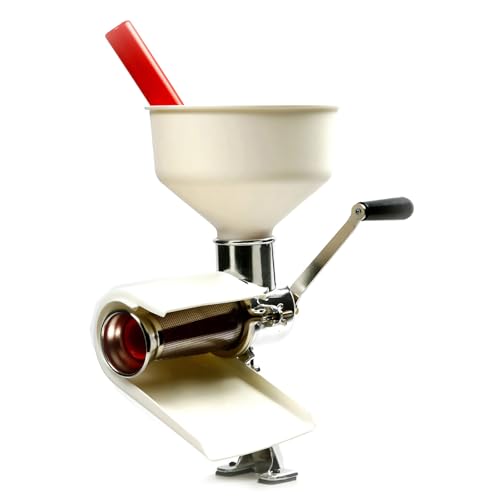
- 3-quart capacity for fruit and vegetable batches
- Separates juice and pulp through a steel screen
- Includes fine mesh screen and standard spiral
Best For: Cooks wanting a classic hand-operated sauce maker
Best Large-Hopper Stainless Strainer
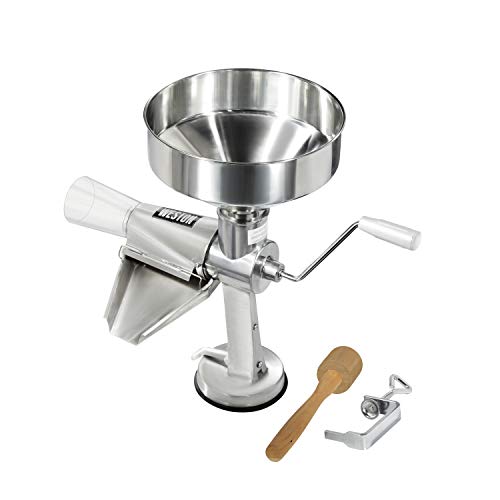
- 1-gallon hopper for larger batches
- Suction-cup and C-clamp mounting
- Includes stomper and 1.5mm screen
Best For: Batch processing with flexible countertop or table mounting
Best Complete Electric-Assisted Kit
Johnny Model 250 Strainer with Motor

- Includes electric motor and hand-crank capability
- Four screens cover berry, tomato, pumpkin, and salsa uses
- Includes standard and grape spirals
Best For: Home preservers processing varied produce with less cranking
Best Suction-Mount Pick

- Separates skins and seeds
- Suction-cup base for stability
- Includes stainless steel pusher
Best For: Small-batch tomato juice, puree, and salsa
Best Hybrid Manual-Electric Pick

- Hand crank and included motor
- Cast aluminum and stainless steel build
- Works with varied produce
Best For: Flexible sauce, puree, juice, and jam making
Best High-Volume Pick
VEVOR Electric Tomato Strainer

- Designed for continuous sauce making
- Four screens for varied textures
- Stainless steel parts and splatter guard
Best For: Large-batch sauce making and harvest canning
Best All-Around Manual Pick

- Multiple screens handle fine sauces to chunky salsa
- Hand-crank design with sturdy countertop clamp
- Includes a five-year warranty
Best For: Versatile home sauce and puree making
Best Electric Batch Option
Weston Deluxe Electric Tomato Strainer

- 250-watt motor with forward and reverse speeds
- One-gallon hopper for larger batches
- Three stainless steel screens included
Best For: Bulk preserving and reduced-effort sauce making
Best High-Volume Stainless Steel Model
VEVOR Electric Tomato Strainer

- 370-watt motor for large-batch processing
- Stainless steel components built for frequent use
- Tool-free disassembly simplifies cleanup
Best For: Harvest-season canning and high-volume processing
Best Clamp-Mount Basic Strainer – Johnny Apple Sauce Maker Model 250
For shoppers comparing manual food strainer machines, the Johnny Apple Sauce Maker Model 250 is a straightforward clamp-mounted option for separating skins and seeds from fruits and vegetables. It includes a 1.3mm apple/tomato screen and a hand crank, making it ready for sauces, purees, jams, and similar preparations.
Best For: Home cooks who want a versatile hand-crank strainer with optional electric-motor compatibility.
Pros:
- Handles purees, pie fillings, juices, jams, soups, baby foods, and sauces.
- Includes an apple/tomato screen, standard spiral, and instruction manual.
- Clamp mounts to countertops from 3/4 to 2-1/8 inches thick.
- Cast aluminum body with stainless steel screens and BPA-free plastic components.
Cons:
- Additional screens and the optional electric motor are sold separately.
- Its 1.3mm screen is the included configuration, so other textures require accessories.
This is a practical entry point for small-batch sauce and puree making, especially if you value a secure countertop clamp and the option to add accessories later.
Best 3-Quart Sauce Maker – Norpro 1951 Original Sauce Master
The Norpro 1951 is one of the more traditional manual food strainer machines, using a hand operation to force produce through a chrome-plated steel screen while separating juice and pulp. Its stated 3-quart capacity suits routine batches of sauces, fruit preparations, and vegetable purees.
Best For: Cooks seeking a classic hand-operated sauce maker with a larger stated capacity.
Pros:
- 3-quart, or 95-ounce, capacity.
- Automatically separates juice and pulp in one operation.
- Includes a fine mesh screen, standard spiral, recipe, and instruction booklet.
- Optional berry, pumpkin, and salsa screens are available.
Cons:
- Additional specialty screens must be purchased separately.
- Listed as hand wash only.
- The supplied notes do not specify a mounting system.
The Norpro stands out for its straightforward design and generous stated capacity, though shoppers wanting specialty textures should budget for its optional screens.
Best Large-Hopper Stainless Strainer – Weston Metal Tomato Strainer
Among manual food strainer machines, the Weston Metal Tomato Strainer is geared toward larger batches and flexible placement. Its 1-gallon hopper, stainless steel construction, and dual mounting system make it suitable for processing tomatoes and other soft produce on a kitchen counter or garden table.
Best For: Batch-oriented cooks who want a stainless steel strainer with flexible mounting options.
Pros:
- Large 1-gallon hopper for processing fruits and vegetables.
- Dual mount system uses a suction-cup base and C-clamp.
- Includes a stomper and 1.5mm multipurpose screen.
- Splash guard and chute help direct puree into a container while reducing mess.
Cons:
- The additional four-piece accessory kit is sold separately.
- The included 1.5mm screen may not cover every desired puree or sauce texture.
- Its notes emphasize tomatoes and soft produce rather than all produce types.
Choose the Weston when hopper capacity and mounting flexibility matter most. Its included screen is useful for tomatoes and apples, while extra screens expand its applications.
Best Complete Electric-Assisted Kit – Johnny Model 250 Strainer with Motor
For shoppers comparing manual food strainer machines but wanting less hand cranking, this Johnny Model 250 bundle includes an electric motor alongside the hand-crank design. It also supplies berry, apple/tomato, pumpkin, and salsa screens, plus two spirals for a broader range of sauces and purees.
Best For: Home preservers who want electric assistance and multiple screens in one package.
Pros:
- Includes both hand-crank capability and an electric motor.
- Supplies berry, apple/tomato, pumpkin, and salsa screens.
- Includes standard and grape spirals for varied preparations.
- Clamp mounts to countertops from 3/4 to 2-1/8 inches thick.
Cons:
- The motor-assisted configuration is less basic than a hand-crank-only setup.
- Its clamp design requires a compatible countertop thickness.
- The supplied notes do not state the motor’s power or speed.
This is the most complete option in the group for cooks who regularly process different produce types and appreciate the choice between manual and electric operation.
Best Suction-Mount Pick – Easy Tomato Strainer
For shoppers comparing manual food strainer machines, this tomato strainer offers a straightforward way to juice and puree tomatoes without peeling, coring, or deseeding first. Its suction-cup base helps keep the mill in place while the stainless steel pusher guides produce through.
Best For: Home cooks who make tomato juice, puree, homemade salsa, and pasta sauces in smaller batches.
Pros:
- Separates skins and seeds as juice runs into the tray.
- Suction mount helps stabilize the food mill during use.
- Includes a stainless steel pusher and is designed for easy cleaning.
Cons:
- The plastic construction may be less substantial than metal-bodied alternatives.
- Its stated uses focus primarily on tomatoes and similar preparations.
This is a practical, compact choice for garden harvests and everyday tomato prep. Choose it if you value simple operation and countertop stability over motorized processing or multiple screens.
Best Hybrid Manual-Electric Pick – Johnny Apple Sauce Maker
This model stands out among manual food strainer machines because it supports both hand-crank operation and the included electric motor. The clamp-based design separates skins and seeds from produce for sauces, purees, juices, jams, soups, and baby foods.
Best For: Cooks who want manual control but also appreciate motor-assisted processing for larger or more frequent batches.
Pros:
- Can be used with the hand crank or included electric motor.
- Sturdy cast aluminum body and stainless steel screen.
- Includes a 1.3 mm apple/tomato screen and standard spiral.
- Clamp mounts to countertops from 3/4 to 2-1/8 inches thick.
Cons:
- At 3.23 kg, it is heavier than a basic plastic strainer.
- Its clamp requires a compatible countertop edge and adequate setup space.
With a five-year warranty and two operating options, this is a versatile choice for cooks who process a variety of produce. It is especially compelling when you want the flexibility to switch between hands-on and powered straining.
Best High-Volume Pick – VEVOR Electric Tomato Strainer
Although it is powered rather than manual, this VEVOR model is a useful comparison point for manual food strainer machines when speed and batch size matter. Its motorized design, stainless steel components, and multiple screens are aimed at continuous sauce making and harvest-season canning.
Best For: Large-batch tomato processing, canning, and cooks who want multiple texture options.
Pros:
- Separates peels and seeds in a single pass.
- Includes 1 mm, 1.5 mm, 3 mm, and 6 mm screens.
- 304 stainless steel parts resist fruit acids and wear.
- Guard cover helps reduce splatter, and a cleaning brush is included.
Cons:
- It is not a manual strainer and requires electrical power.
- At 7.2 pounds, it is less portable than smaller hand-operated options.
- The motorized setup may be more than needed for occasional small batches.
This is the efficiency-focused option for users processing substantial harvests. The four screens provide more texture control than simpler tomato mills, while the powered operation reduces the physical effort of repeated straining.
Best All-Around Manual Pick – Johnny Apple Sauce Maker
For shoppers comparing manual food strainer machines, the Johnny Apple Sauce Maker is a versatile hand-crank option for separating skins and seeds from fruits and vegetables. Its included screens and spirals support everything from smooth berry sauces and baby food to pumpkin puree and chunky salsa.
Best For: Home cooks who want flexible, hand-powered straining for sauces, purees, jams, juices, and pie fillings.
Pros:
- Includes berry, apple/tomato, pumpkin, and salsa screens.
- Sturdy cast aluminum body with stainless steel screens.
- Clamp mounts to countertops from 3/4 to 2-1/8 inches thick.
- Five-year warranty and BPA-free plastic components.
Cons:
- Manual hand-crank operation requires more effort than an electric model.
- Optional electric motor is sold separately.
This is a strong choice when versatility matters more than automation. The multiple screens make it adaptable, while the clamp-based design provides a stable foundation for regular home preserving.
Best Electric Batch Option – Weston Deluxe Electric Tomato Strainer
Among manual food strainer machines, the Weston Deluxe is a practical upgrade for cooks who process larger batches and prefer motorized operation. Its 250-watt motor, one-gallon hopper, reverse function, and three screens are designed for sauces, purees, jellies, and salsa.
Best For: Gardeners and home preservers processing bulk tomatoes, soft fruits, and vegetables with less hand effort.
Pros:
- 250-watt motor offers forward and reverse speeds.
- One-gallon hopper helps reduce frequent refills.
- Includes 1.5mm, 3mm, and 6mm stainless steel screens.
- Stomper helps guide food safely into the hopper.
Cons:
- Electric operation requires a 120-volt power source.
- One-year warranty is shorter than the Johnny model’s warranty.
The Weston is better suited to repeated or high-volume batches than a hand-crank strainer. Its screen selection covers smooth and chunky preparations, while reverse speed can help prevent jams during processing.
Best High-Volume Stainless Steel Model – VEVOR Electric Tomato Strainer
For shoppers seeking an alternative to manual food strainer machines, the VEVOR Electric Tomato Strainer emphasizes speed, capacity, and durable construction. Its 370-watt motor is rated for high-volume processing, while stainless steel components are designed for frequent sauce, puree, jam, and juice making.
Best For: Serious home preservers processing large harvests and prioritizing quick cleanup and stainless steel construction.
Pros:
- 370-watt motor supports efficient large-batch processing.
- Large hopper reduces the need for frequent refilling.
- Stainless steel hopper, screen, juice tray, and guard resist fruit acids and wear.
- Core components disassemble without tools for quick rinsing.
Cons:
- At 21.7 pounds, it is heavier than the other listed options.
- Produce should be cut into small pieces to help reduce clogging.
The VEVOR stands out for high-frequency processing and easier cleanup. Its heavier stainless steel build may appeal to users who want a more durable machine for harvest-season canning rather than occasional small batches.
How We Picked These Manual Food Strainer Machines
We focused on the features that matter most during real food-preparation and canning sessions: separation performance, hopper capacity, construction, mounting stability, ease of cleaning, available accessories, and power requirements. The selection includes traditional hand-crank machines as well as electric models for shoppers who want higher throughput with less manual effort.
Product descriptions and specifications can vary by seller, so confirm the included screens, clamps, motor details, and compatible replacement parts before ordering.
Quick Comparison
| Best For | What to Look For |
|---|---|
| Occasional applesauce or sauce making | A compact clamp-on manual strainer with a simple hand crank |
| Frequent large batches | A sturdy metal hopper, stable mounting system, and generous capacity |
| Tomato processing | A screen designed to separate seeds and skins efficiently |
| Thick purées and pumpkin | Strong construction, suitable screens, and a crank that turns smoothly |
| Higher-volume processing | An electric motor with clear wattage and output specifications |
Key Buying Factors for Manual Food Strainer Machines
Manual or Electric Operation
Hand-crank models are generally simpler, quieter, and easier to store. They are a practical choice for small and medium batches and do not require an outlet. Electric models can process more produce with less arm fatigue, but they add motor noise, cost, and additional parts to clean.
Mounting and Stability
Clamp-based strainers need a compatible countertop or table edge and enough clearance for the bowl and waste chute. Check the clamp range and confirm that your work surface is sturdy. A stable machine produces smoother operation and reduces spills.
Screen and Separation Design
Look for screens suited to the foods you prepare most often. Tomato screens may differ from screens intended for berries, pumpkin, or apples. Replaceable screens are useful if you plan to make several types of sauces and purées.
Capacity and Cleanup
A larger hopper can reduce refilling during harvest-season processing, while a smaller unit may be easier to store. Removable food-contact parts, straightforward disassembly, and dishwasher-safe components can make a noticeable difference after a long session.
Build Quality and Replacement Parts
Metal components and reinforced mounting hardware are valuable for frequent use, especially with dense foods. Also check whether screens, gaskets, springs, and other wear parts are available separately.
Who Should Buy Which Manual Food Strainer Machines?
Choose a basic manual clamp-on model if you process occasional batches and want the lowest-complexity option. A more substantial metal or deluxe manual strainer is better for regular preserving, larger quantities, and users who value durability. If hand cranking becomes tiring or you routinely process garden harvests in bulk, an electric tomato strainer may be worth the extra cost and storage space.
For the best match, prioritize the foods you make most often, then compare mounting requirements, screen options, capacity, and cleanup. That approach will help you select among these Manual Food Strainer Machines without paying for features you are unlikely to use.