Pizza Steel review is a good fit for buyers who want a heavier-duty baking surface that can improve crust development at home.
This Pizza steel review focuses on what the listing actually supports and where the product makes the most sense.
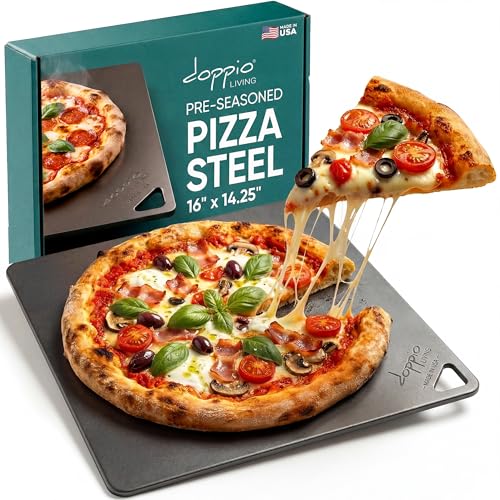
Pizza Steel Review Summary
If you want a baking surface that can hold heat better than a thin pan and support pizza, bread, and flatbreads, this Pizza Steel is aimed squarely at that use case.
Its main appeal is straightforward: a solid 1/4-inch-thick A36 carbon steel plate, pre-seasoned with flaxseed oil, made in the USA, and sized for ovens, grills, and BBQ setups.
That combination makes it especially attractive for home cooks who want stronger bottom heat and more serious crust development without moving to a dedicated pizza oven.
This is also a sensible pick for sourdough bakers and anyone who wants one tool that can live in multiple cooking environments.
The tradeoff is equally clear: this is not a lightweight convenience accessory.
It is heavy, manual, and built around performance rather than portability.
If you want better browning, more thermal mass, and a surface that can stand up to repeated high-heat use, it fits well.
If you want something easy to lift, easy to clean, and completely maintenance-free, this is probably too much steel for your needs.
Review Scorecard
| Category | Score | Rationale |
|---|---|---|
| Heat Retention | 9/10 | 1/4-inch carbon steel should hold and transfer heat strongly for pizza and bread baking. |
| Crust Performance | 9/10 | The listing is built around even heat and better crust development, which is the main reason to buy a steel. |
| Versatility | 8/10 | Works in ovens, grills, and BBQ setups, and supports pizza, sourdough, calzones, and flatbreads. |
| Build Quality | 9/10 | Heavy-duty A36 carbon steel and USA manufacturing signal a serious, durable build. |
| Ease of Use | 7/10 | Pre-seasoned and finger holes help, but the steel is still heavy and requires normal steel-care habits. |
| Value for Serious Bakers | 8/10 | Strong feature set for buyers who will actually use the thermal mass and multi-use format. |
Verdict: this is best for buyers who care about crust quality, heat stability, and long-term durability more than convenience.
Key Features and Specifications of Pizza Steel
The core specification is simple and useful: this is a 16-inch by 14.25-inch, 1/4-inch-thick pizza steel made from A36 carbon steel.
That thickness matters because it gives the steel enough mass to absorb heat and keep it in play when you load dough onto the surface.
The listing positions it as a tool for improving crust quality rather than just a tray for moving food around.
The steel is described as pre-seasoned with high-grade organic flaxseed oil, which means it arrives with a ready-to-use nonstick-style surface instead of requiring a full seasoning process from scratch.
It also includes finger holes for carrying and is described as having no sharp edges, which are practical details that matter with a thick, heavy metal plate.
Another useful point is compatibility.
The product is presented as suitable for ovens, kitchen stoves, outdoor grills, wood, charcoal, and gas BBQ setups.
That makes it more flexible than a single-purpose pizza accessory.
It is also marketed beyond pizza, with use cases for artisan sourdough, rustic loaves, calzones, and flatbreads.
| Spec | Details |
|---|---|
| Product type | Pizza steel / baking steel |
| Material | A36 carbon steel |
| Size | 16″ x 14.25″ |
| Thickness | 1/4″ |
| Finish | Pre-seasoned with flaxseed oil |
| Origin | Made in USA |
| Use cases | Pizza, bread, sourdough, calzones, flatbreads, grill baking |
| Handling | Finger holes, no sharp edges |
Pros and Cons of Pizza Steel
Pros
- Strong heat retention from the thick steel construction.
- Useful versatility across pizza, bread, oven baking, grill use, and BBQ use.
- Pre-seasoned surface reduces setup friction.
- Made in USA construction may appeal to buyers who care about origin and material consistency.
- Practical handling touches like finger holes and no sharp edges improve day-to-day use.
Cons
- Heavy to move and store, especially compared with pans or thinner stones.
- Requires steel care, so it is not the best choice for buyers who want zero-maintenance cookware.
- Overkill for casual use if you only bake pizza occasionally.
- Best benefits depend on technique, so inexperienced bakers may not see the full upside immediately.
Who Should Buy Pizza Steel?
This product makes the most sense for home pizza makers who want a better bottom crust and are willing to use a heavier, more performance-oriented tool.
It is also a strong fit for sourdough bakers who want reliable heat transfer and a surface that can support artisan loaves, not just pizza nights.
It should also appeal to buyers who cook on grills or BBQ setups and want one board that can move between indoor and outdoor cooking.
If you already know you like high-heat baking and want something with more thermal mass than a typical baking sheet, this is in the right category.
You should probably skip it if you want a lightweight, easy-lift accessory or if your oven use is infrequent and casual.
The steel is built for people who will actually use its heat-holding ability.
If that sounds like you, it is a sensible buy.
If not, a simpler pizza stone or pan may be the better match.
How Pizza Steel Performs for High-Heat Baking
Heat Retention and Oven Spring
The main performance advantage here is thermal mass.
A 1/4-inch steel plate can hold a meaningful amount of heat, which helps when dough lands on the surface and immediately starts pulling energy out of the baking zone.
That is one reason pizza steels are so often preferred for better browning and more confident oven spring.
Crust Browning and Bottom Color
The listing emphasizes even heat distribution and a better crust, and that is the right way to think about this product.
For pizza, the bottom browning matters just as much as the topping finish.
This kind of steel is aimed at giving the base a stronger, more even bake, especially when a standard sheet pan would leave it pale or soft.
Bread and Sourdough Use
Because the surface is not pizza-specific, it should also be useful for rustic loaves and sourdough.
That matters if you bake more than one type of dough.
A steel like this gives you one high-heat platform that can support different baking styles instead of forcing you to buy separate accessories for each job.
Grill and BBQ Flexibility
The compatibility with grills and BBQ setups broadens the use case further.
That is useful if you cook seasonally, outdoors, or with fire-based heat sources.
The steel is not just a kitchen gadget; it is a more general high-heat tool, which is part of its long-term appeal.
Alternatives to Pizza Steel
If you want credible alternatives, the main comparison points are usually material, weight, and ease of use.
A Baking Steel is the obvious category alternative for buyers who want a similar heavy-duty steel baking surface.
A Lodge cast iron pizza pan is a different path for people who prefer cast iron’s heat retention and familiar care routine.
A pizza stone from Emile Henry or another ceramic pizza stone is worth looking at if you want a lighter-feeling option with a more traditional stone-baking profile.
Search these Amazon options:
Is Pizza Steel Worth It?
Yes, if you care about crust quality and plan to use it regularly. This Pizza Steel has the right fundamentals for serious home baking: thick A36 carbon steel, pre-seasoning, practical handling details, and flexibility for ovens, grills, and BBQ use.
It is especially appealing for pizza and sourdough buyers who want more heat stability than a thin pan can provide.
No, if you want the simplest possible cooking accessory. Its weight and maintenance expectations make it a better fit for committed bakers than casual users.
For the right buyer, though, it is a strong, practical tool that can earn its place quickly.