Titanium Cutting Board is a niche kitchen tool, but the listing makes its purpose clear: safer separation for raw and ready-to-eat food, with low-maintenance cleanup.
If you want a board that leans more toward hygiene and utility than rustic kitchen style, this Titanium Cutting Board review covers the tradeoffs that matter.
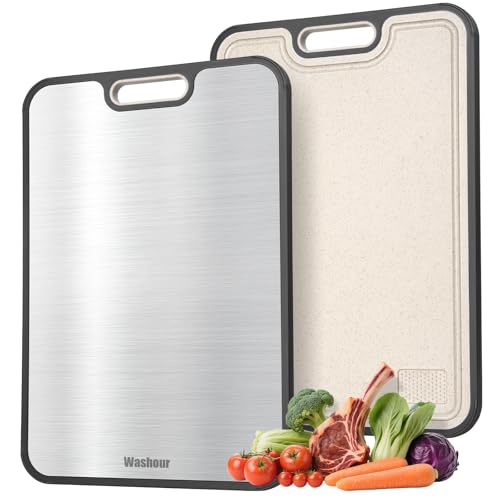
Titanium Board Review Summary
Titanium Cutting Board is best for buyers who want a compact, easy-clean prep surface with a more segmented workflow than a standard wooden or plastic board.
The dual-sided layout gives it a practical edge for households that want one side reserved for raw meat, seafood, and poultry, while the other handles fruit and ready-to-eat ingredients.
That makes it especially appealing for smaller kitchens, apartments, RVs, dorms, campers, and anyone who values a tidy, low-maintenance setup over decorative appeal.
Verdict: This is a function-first board with a clear hygiene angle. The strongest reasons to buy it are the dual-material structure, juice control, and the promise of simple cleanup.
The biggest reason to skip it is also simple: if you want a traditional wood cutting surface or a softer feel under the knife, this is not that product.
Review Scorecard
| Category | Score | Buyer-focused rationale |
|---|---|---|
| Hygiene separation | 9/10 | Dual-sided design separates raw proteins from produce and ready-to-eat food. |
| Cleanup convenience | 9/10 | Non-porous materials and simple rinse-focused maintenance reduce upkeep. |
| Everyday practicality | 8/10 | Juice groove, hanging hole, and grinder area add real utility. |
| Kitchen flexibility | 8/10 | Large surface and compact-use positioning suit small homes and mobile kitchens. |
| Durability potential | 8/10 | Scratch and stain resistance are emphasized in the listing. |
| Knife-friendliness | 6/10 | The listing favors hardness and low maintenance more than a forgiving cutting feel. |
| Value for specific use cases | 8/10 | Strong fit if you care about sanitation and organization more than aesthetic warmth. |
Key Features and Specifications of Titanium Board
The headline feature is the 2-in-1 dual-sided construction.
One side uses food-grade titanium for raw meat, seafood, and poultry.
The other uses BPA-free PP for fruits and ready-to-eat food.
That split matters because it gives the board a clear workflow instead of forcing every ingredient onto the same surface.
The board is listed at 16 inches by 11 inches, which is a useful middle ground.
It is large enough for ordinary prep tasks without turning into an oversized slab that hogs counter space.
That size makes sense for smaller kitchens in particular, where storage and maneuverability matter as much as cutting area.
The surface is described as non-porous, odor-resistant, and easy to clean.
Those are the selling points that will matter most to buyers comparing it with wood or more textured boards.
The listing also emphasizes that the design avoids grooves that trap scraps, which suggests an emphasis on everyday hygiene and faster cleanup.
Other practical details include:
- Deep juice channels to help contain liquid runoff
- Integrated spice grinder area for small prep tasks
- Scratch and stain resistance for longer-term use
- Reserved hanging hole for drying and storage
- Suitable for compact living spaces such as RVs, campers, apartments, and dorms
Taken together, those features frame Titanium Cutting Board as a modern utility board rather than a premium chef showpiece.
It is built to reduce friction in daily prep, not to impress visually.
Pros and Cons of Titanium Board
Pros
- Clear raw-food separation. The dual-sided build is the strongest reason to consider it.
- Low-maintenance cleaning. The listing repeatedly stresses easy rinsing and simple upkeep.
- Odor and stain resistance. That matters for garlic, onions, fish, and other pungent ingredients.
- Useful details. Juice channels, hanging hole, and grinder area are more than marketing fluff.
- Good fit for small spaces. The product is positioned for compact kitchens and portable living setups.
Cons
- Not a classic board experience. Buyers who prefer wood or a softer cutting feel may not like it.
- Narrower appeal. The design is optimized for utility and hygiene, not universal kitchen aesthetics.
- Material-specific expectations. A harder, low-porosity board can feel less forgiving if you are used to more traditional surfaces.
Who Should Buy Titanium Board?
This Titanium Cutting Board makes sense if you want a board that supports clean separation of food types.
It is a strong fit for households that prepare raw meat often and want an obvious reason to keep that workflow separate from produce and ready-to-eat items.
The board is also a sensible choice for people who dislike soaking, scrubbing, and dealing with odors in more absorbent materials.
It is also worth considering if you live in a small kitchen.
The listing’s focus on apartments, dorms, RVs, and campers suggests this is designed for limited space and frequent use.
The hanging hole and easy-clean pitch make that even more practical.
Skip it if you want a board for knife feel, traditional presentation, or a warmer kitchen aesthetic.
This is not trying to be a butcher-block centerpiece.
It is trying to be a cleaner, more controlled prep platform.
How the Titanium Board Handles Real Kitchen Use
Dual-Sided Workflow
The most meaningful design choice is the split between titanium and BPA-free PP.
In practice, that means you can assign the board different jobs instead of treating every ingredient the same way.
For many buyers, that alone will justify the product because it reduces cross-use confusion and gives the kitchen a more organized workflow.
Juice Control and Prep Management
Deep juice channels are a practical addition, not just a feature bullet.
They help contain runoff from tomatoes, citrus, meats, and other wet ingredients.
The integrated spice grinder area also adds a small but useful layer of convenience, especially for cooks who like to keep tasks moving without bringing out extra tools.
Cleanup and Storage
This board’s strongest non-functional appeal is how little effort it appears to ask for after use.
The non-porous surface, odor resistance, scratch and stain resistance, and simple rinse guidance all point in the same direction: easy maintenance.
The hanging hole is a good finishing touch because it supports drying and storage without complicating the design.
Best Use Cases
The board’s listed audience is very specific, and that is a good sign.
It sounds best for people who cook regularly in compact environments, want a sanitary workflow, and care about minimizing cleanup time.
If that sounds like your kitchen, the Titanium Cutting Board is solving the right problem.
Alternatives to Titanium Board
If you want something more traditional, a John Boos cutting board is a common wood-board alternative for buyers who prefer a classic prep surface.
If you want a softer, widely available utility option, a OXO Good Grips cutting board may suit you better.
If you want another practical, hygiene-minded board, a Epicurean cutting board is worth comparing for low-fuss daily prep.
If you want a premium stainless-style utility board, search for stainless steel cutting board options and compare the surface feel carefully before buying.
Is Titanium Board Worth It?
Titanium Cutting Board is worth it if you want a low-maintenance, hygiene-focused prep board with a clear division between raw food and ready-to-eat ingredients.
The dual-sided build, juice groove, grinder area, and easy-clean positioning make it a smart buy for compact kitchens and practical cooks.
It is less compelling if you care most about the feel of a traditional wood board or want a more decorative kitchen piece.
For the right buyer, though, this is a sensible utility purchase and a straightforward answer to the question of whether Titanium Cutting Board is worth it: yes, if hygiene and convenience are your priorities.