Small bakeries need dependable dough equipment that saves labor without taking over valuable counter space. The best machines balance batch capacity, kneading performance, fermentation control, and easy cleanup.
We compared 10 compact commercial and high-capacity dough makers to help you choose a practical option for bread, pizza, enriched dough, and other daily bakery work.
Best 10 Dough Kneading Machines for Small Bakeries Picks for 2026
Heavy-Duty Spiral Pick
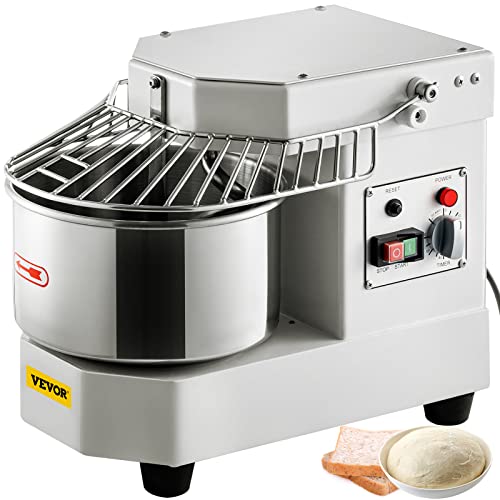
- 3 kg dough capacity
- Dual-rotation kneading action
- 60-minute timer and safety shield
Best For: Small bakeries handling regular batches of heavy dough
Multi-Task Commercial Pick

- Three included attachments
- Three adjustable speeds
- 30-minute timer
Best For: Small commercial kitchens with varied mixing tasks
Large-Batch Fermentation Pick

- Up to 2,800 g flour capacity
- MIX and BLEND functions
- Winter and Summer fermentation modes
Best For: Medium-batch dough and filling preparation with fermentation
Heavy-Duty Control Pick

- Handles a stated 300–1,400g dough range
- Constant-temperature fermentation from 77–95°F
- Knob controls and removable lid for practical operation
Best For: Small bakeries making varied dough batches and recipes
Best Compact Fermenting Mixer
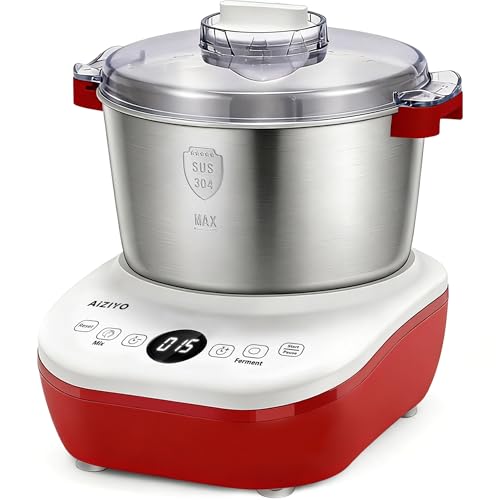
- Mixes and ferments in one appliance
- S-shaped blade with mix-pause-mix action
- Compact stainless steel design
Best For: Small-batch baking operations needing integrated proofing
Best Larger Red Mixer
- Larger 7.4-quart stainless steel bowl
- Mix and ferment functions
- Face-up touch-panel controls
Best For: Small bakeries needing larger everyday dough batches
Heavy-Duty Spiral Pick – VEVOR 8.5Qt Commercial Mixer
For small bakeries seeking dough kneading machines for small bakeries, the VEVOR 8.5Qt Commercial Mixer offers a commercial-oriented spiral mixing setup with an 8-liter bowl, dual rotation, and timed operation. It can handle up to 3 kg of dough and uses food-grade stainless steel components in food-contact areas.
Best For: Small bakeries, pizzerias, restaurants, and other operations making batches of heavier dough.
Pros:
- Dual rotation combines a 21 RPM bowl with a 159 RPM hook for more even kneading.
- Handles up to 3 kg or 6.6 lb of dough in its 8-liter bowl.
- Includes a timer adjustable for up to 60 minutes and a safety shield that stops operation when improperly closed.
- Stainless steel bowl, hook, and rod are food-grade, rust-resistant, and easier to clean.
Cons:
- Its single-speed design offers less control than mixers with multiple speeds.
- At 81.6 pounds, it is a substantial countertop or work-area commitment.
- The listed 70 dB noise level may be noticeable in a small workspace.
Its large dough capacity and dual-rotation action make this a practical choice when dough is the primary workload. The fixed speed and heavy build are trade-offs for bakeries that need more recipe flexibility or frequent repositioning.
Fermentation-Focused Choice – Joydeem 5.3Qt Dough Maker
The Joydeem 5.3Qt Electric Dough Maker is one of the more compact dough kneading machines for small bakeries, combining intermittent kneading with a built-in fermentation function. Its 5.3-quart bowl accommodates 300 to 1,600 grams of flour, making it suited to smaller production runs.
Best For: Small bakeries or specialty baking operations that value timed kneading and controlled dough fermentation.
Pros:
- Supports mixing, fermentation, or a combined mix-and-ferment cycle.
- Maintains a fermentation range of 77–100°F with its integrated heating unit.
- Mixing time adjusts from 5–40 minutes, while fermentation runs from 5–120 minutes.
- 304 stainless steel bowl and blade are durable and easy to clean.
Cons:
- The 180W motor and 5.3-quart capacity are better suited to smaller batches than high-volume production.
- It has one non-adjustable speed rather than variable-speed control.
- The manufacturer recommends using warm water during winter because the fermentation range is limited.
This model stands out when fermentation is as important as kneading. Its smaller capacity and single-speed operation may limit throughput, but the timed programs and temperature support can simplify consistent small-batch production.
Multi-Task Commercial Pick – VEVOR 15Qt Stand Mixer
For bakeries that need more than kneading, the VEVOR 15Qt Commercial Food Mixer combines a dough hook, flat beater, and wire whip with three adjustable speeds. Among dough kneading machines for small bakeries, it offers useful recipe versatility, though its stated food capacity is up to 1.5 kg per batch.
Best For: Small commercial kitchens that prepare dough, batters, fillings, mashed foods, and whipped mixtures.
Pros:
- Includes dough hook, flat beater, and wire whip for different preparations.
- Three speeds cover kneading, general mixing, and whipping tasks.
- A 30-minute timer helps reduce the need for constant monitoring.
- Detachable bowl and attachments support easier cleaning.
Cons:
- The supplied notes limit food capacity to 1.5 kg or 3.3 lb despite the 15-quart bowl designation.
- Speed changes require stopping the machine first.
- Its 105.8-pound weight and 27-inch height require significant workspace.
This is a versatile option for a bakery with varied mixing needs rather than a machine dedicated only to large dough batches. The attachment set and speed range broaden its usefulness, while its size and capacity specification deserve careful planning before purchase.
Large-Batch Fermentation Pick – Joydeem 9.5Qt Dough Maker
The Joydeem 9.5Qt Electric Dough Maker is designed for small bakeries that want larger dough batches plus built-in fermentation. Its 300W motor, 9.5-quart bowl, two mixing functions, and seasonal fermentation modes make it a flexible choice among dough kneading machines for small bakeries.
Best For: Small bakeries making medium-to-large batches of bread, pizza, sourdough, dumpling, or filled dough products.
Pros:
- Handles 900–2,800 grams of flour, with a maximum fermented-dough flour weight of 2,500 grams.
- Offers MIX for intermittent kneading and BLEND for continuously mixing fillings.
- Winter and Summer fermentation modes support year-round temperature adjustment.
- Provides adjustable mixing times from 5–30 minutes and fermentation times from 5–120 minutes.
Cons:
- It does not provide adjustable kneading speeds.
- The supplied warranty replacement note applies to home use only, which may not suit commercial buyers.
- The plastic-and-stainless-steel construction may feel less industrial than a dedicated commercial mixer.
This model is a strong fit when a bakery needs both dough preparation and fermentation in one machine. Its larger capacity and filling mode improve flexibility, but buyers seeking high-speed or fully variable-speed commercial mixing may prefer a different design.
Compact Fermentation Pick – Joydeem 7.4Qt Dough Maker
For small bakeries seeking dough kneading machines for small bakeries, the Joydeem JD-HMJ7L combines timed kneading with fermentation in a space-conscious vertical design. Its 250W motor and stainless steel container suit bread, pizza, buns, and dumpling dough, with a stated kneading cycle of about 15 minutes.
Best For: Small bakeries and compact kitchens that want straightforward timed kneading and proofing in one appliance.
Pros:
- Microcomputer controls support preset timing and automated kneading and fermentation programs.
- 6.6Qt/6.24-liter capacity accommodates larger dough preparations.
- Removable top cover and dishwasher-safe bowl and blade simplify cleanup.
- Vertical construction, suction cups, and a weighted body help conserve space and improve stability.
Cons:
- Only one speed is listed, with no speed adjustment.
- The stated noise level is 70 dB.
- The base is not dishwasher safe.
The Joydeem is a practical choice when timed fermentation and a relatively compact footprint matter more than variable-speed control. Its one-year warranty and included measuring accessories add useful support for smaller operations.
Heavy-Duty Control Pick – 6.5QT Empire Red Dough Mixer
This 6.5QT model is one of the more versatile dough kneading machines for small bakeries, handling a listed 300 to 1,400 grams of dough per batch. It pairs a stainless steel S-shaped blade with timed mix-pause-mix kneading and constant-temperature fermentation for bread, pizza, pasta, and dumpling preparation.
Best For: Small bakeries that want a broad stated dough range, manual knob control, and integrated fermentation.
Pros:
- 6.5QT 304 stainless steel bowl is rated for 300 to 1,400 grams of dough.
- Mix-pause-mix operation is designed to simulate hand kneading and form gluten efficiently.
- Constant-temperature fermentation ranges from 77–95°F (25–38°C).
- Removable lid, blade, suction-cup base, and knob controls support practical daily use.
Cons:
- The bowl is not recommended for dishwasher cleaning.
- Fermentation requires yeast or baking powder.
- The available details do not specify the unit’s wattage or dimensions.
Its combination of a wide dough-capacity range, tactile controls, and temperature-managed proofing makes this a strong fit for varied small-bakery production. The stated three-year repair coverage and lifetime technical support are additional advantages for frequent use.
Large-Batch Window Pick – 7.4Qt Fermenting Dough Mixer
For operators comparing dough kneading machines for small bakeries, this 7.4-quart dough mixer emphasizes batch capacity and convenient ingredient additions. Its 250W motor, 304 stainless steel bowl and blade, intermittent operation, and constant-temperature fermentation are designed for bread, pizza, and pastry dough.
Best For: Small bakeries and group baking sessions that prioritize a large bowl and the ability to add ingredients without stopping.
Pros:
- 7.4-quart/7-liter capacity supports larger dough preparations.
- Top window allows water, seasoning, or other ingredients to be added during mixing.
- Constant-temperature fermentation is intended to provide consistent proofing conditions.
- Intermittent kneading helps limit overheating and premature rising, according to the supplied specifications.
Cons:
- Only one speed is listed.
- The supplied details do not state a specific fermentation temperature range.
- Included accessories and features such as the digital display may vary from the core mixer configuration.
This model stands out for its large stated capacity and top-access window, both useful when adjusting dough during production. It is a sensible option for buyers who value batch size and proofing assistance over multi-speed mixing.
Best Compact Fermenting Mixer – AIZIYO DoughChief 5.3QT
For small bakeries seeking dough kneading machines for small bakeries that can also support proofing, the AIZIYO DoughChief combines mixing and constant-temperature fermentation in a relatively compact 5.3-quart format. Its touch controls, stainless steel bowl, and mix-pause-mix program are suited to bread, pizza, pasta, and mochi preparation.
Best For: Small-batch bakeries and home-based baking businesses that want an integrated mixer and dough-proofing function without a larger commercial footprint.
Pros:
- Mixes and ferments dough, with a stated fermentation range of 77–100°F.
- S-shaped blade and mix-pause-mix program are designed to simulate hand kneading.
- Wide top opening allows flour or water adjustments while mixing.
- 304 stainless steel bowl and touch-panel controls support routine use.
Cons:
- The 5.3-quart capacity is smaller than the two 7.4-quart models in this roundup.
- Its single 200-watt motor and one-speed design may be less flexible for varied production needs.
- The listed noise level is 75 dB.
This is a practical option when controlled proofing matters as much as kneading. Choose it for compact, repeatable batches rather than maximum throughput.
Best Larger Red Mixer – AIZIYO DoughChief 7.4QT
The AIZIYO DoughChief 7.4QT is one of the more capacity-focused dough kneading machines for small bakeries, offering a larger stainless steel bowl while retaining integrated fermentation. Its microcomputer-controlled, face-up touch panel and ingredient access are useful for repeat bread and pizza production.
Best For: Small bakeries and family-scale operations that need more batch capacity than a 5.3-quart mixer while still valuing a compact, lightweight appliance.
Pros:
- 7.4-quart capacity provides more room for family-size or larger dough batches.
- Mix, ferment, or combine both functions in one machine.
- Maintains a stated 77–100°F fermentation range.
- Wide opening supports adding ingredients during mixing.
Cons:
- Only one speed is listed, limiting speed-selection flexibility.
- The listed noise level is 75 dB.
- At 250 watts, it is intended for everyday baking rather than clearly specified heavy commercial production.
Compared with the 5.3-quart version, this model prioritizes capacity without adding a more complex speed system. It is a sensible fit for modest production volume and straightforward bread or pizza workflows.
Best Easy-Clean White Mixer – AIZIYO DoughChief 7.4QT
For bakeries comparing dough kneading machines for small bakeries with cleanup in mind, this white AIZIYO DoughChief pairs a 7.4-quart stainless steel bowl with removable parts and a removable lid. It provides mix, ferment, and mix-and-ferment modes for bread, pizza, pasta, and other everyday doughs.
Best For: Small bakery kitchens and family baking setups that want a larger batch size, integrated proofing, and dishwasher-safe removable parts.
Pros:
- 7.4-quart food-grade stainless steel bowl suits family-size batches.
- Three modes support mixing, fermentation, or both together.
- Removable S-shaped blade and mix-pause-mix program are designed to mimic hand kneading.
- Dishwasher-safe removable parts can simplify cleanup.
Cons:
- Only one speed is listed.
- The listed noise level is 75 dB.
- Its 250-watt specification may not suit high-volume commercial production without confirming workload requirements.
This version stands out for workflow convenience: its removable components and lid make post-batch cleanup easier, while the fermentation mode supports more consistent rising. It is a strong choice where convenience and batch capacity matter more than multiple speeds.
How We Picked the Best Dough Kneading Machines for Small Bakeries
We focused on features that matter in a small production kitchen: bowl capacity, dough-focused mixing performance, fermentation functions, control systems, materials, and day-to-day usability. The selection includes compact 5.3-quart models, mid-size 6.5- and 7.4-quart machines, and larger 8.5- and 15-quart commercial mixers.
Because listed wattage alone does not determine kneading quality, consider motor output alongside the type and amount of dough you plan to make. Removable lids, stainless steel bowls, timing controls, and accessible touch panels can also reduce cleanup and simplify repeatable production.
Quick Comparison
| Capacity range | Best suited to | Features to prioritize |
|---|---|---|
| 5.3 quarts | Small batches and limited counter space | Compact footprint, fermentation, simple controls |
| 6.5–7.4 quarts | Regular bread and pizza production | Stainless bowl, timer, removable lid, flexible programs |
| 8.5–9.5 quarts | Larger batches and varied recipes | Higher capacity, dual functions, stable operation |
| 15 quarts | Higher-volume bakery work | Commercial construction, timing function, available workspace |
Key Buying Factors for Dough Kneading Machines for Small Bakeries
Capacity and Batch Size
Choose a bowl large enough for your normal batch, but avoid sizing only for occasional maximum loads. A 5.3-quart machine may suit a startup bakery or specialty menu, while 7.4- to 9.5-quart models offer more flexibility. A 15-quart mixer makes sense when production volume justifies its larger footprint.
Mixing Versatility
Check whether the machine is designed primarily for dough or also handles fillings and other mixtures. Dual-function designs can reduce the need for separate equipment, but dedicated dough machines may be simpler for bakeries with a focused production process.
Fermentation and Timing Controls
Built-in fermentation can help standardize proofing, particularly when seasonal temperature changes affect dough behavior. Microcomputer controls, touch panels, and programmable timing are useful when staff need consistent results across repeated batches.
Construction and Cleanup
304 stainless steel bowls are durable and generally easy to sanitize. Removable lids make it easier to add ingredients and clean around the bowl, while a compact design matters when the machine shares space with ovens, prep tables, and storage.
Who Should Buy Which Dough Kneading Machines for Small Bakeries?
Choose a compact 5.3-quart model if you make smaller batches, have limited counter space, or are building a bakery menu gradually. Choose a 6.5- or 7.4-quart machine for a balanced combination of capacity, fermentation features, and everyday versatility. Choose a 8.5- or 9.5-quart model if you regularly prepare larger batches or want extra capacity for busy service periods. Choose the 15-quart option when throughput is the priority and you have sufficient workspace and electrical capacity.
Before ordering, confirm the machine’s dimensions, voltage, recommended dough load, included attachments, warranty terms, and cleaning instructions. These details can matter as much as advertised capacity when selecting equipment for a working bakery.