The best meat slicers make it easier to prepare uniform deli meats, roasts, cheeses, bread, and vegetables without relying on pre-sliced ingredients. The models in this roundup range from compact home units to larger commercial-style machines.
Use the buying guide below to compare cutting capacity, adjustment range, removable parts, blade design, and the level of cleanup each slicer requires.
Best 10 Meat Slicers Picks for 2026
Commercial Power Pick
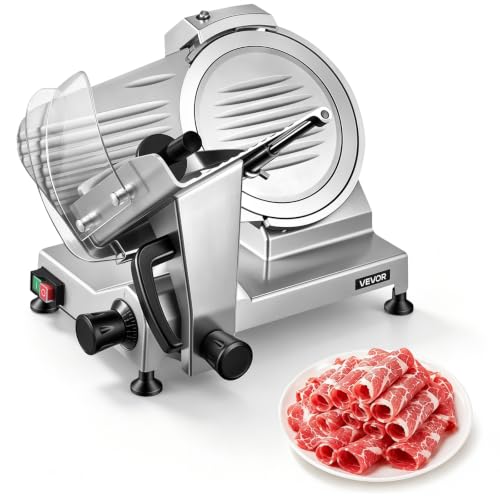
- 10-inch carbon steel blade with built-in sharpening stone
- 240W motor and 0–0.47-inch thickness adjustment
- Removable food-contact parts and stable food pusher
Best For: High-volume slicing and commercial-style countertop use
Flexible Home Choice

- Includes serrated and non-serrated stainless steel blades
- Cuts from ultra-thin to about 3/4 inch
- Removable carriage, pusher, and blade ease cleaning
Best For: Versatile everyday home food slicing
Safety-Focused Versatility
VEVOR 8.6-Inch Dual-Blade Slicer

- Serrated and non-serrated SUS420 blades included
- 0–0.6-inch adjustable slicing thickness
- Dual lock and suction-cup feet improve stability
Best For: Home cooks wanting flexible, safety-oriented slicing
Trusted Countertop Classic
Cuisinart Kitchen Pro Food Slicer
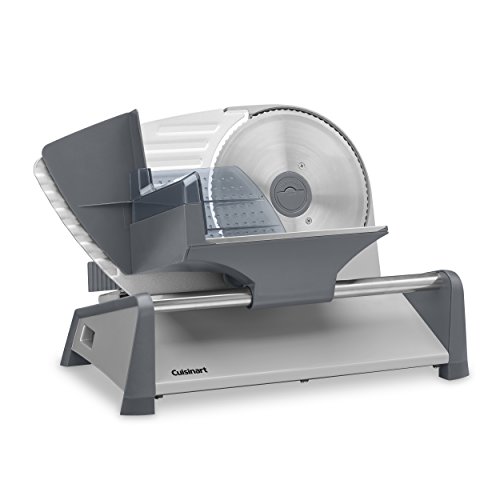
- 7.5-inch stainless steel blade for home slicing
- 1/32- to 1/2-inch slice-control range
- Removable parts and three-year motor warranty
Best For: Precise everyday countertop slicing
Heavy-Duty Pick
VEVOR 12-Inch Commercial Meat Slicer

- Large 12-inch carbon steel blade
- 0–15 mm thickness adjustment
- Stable, safety-focused aluminum build
Best For: Frequent batch slicing and larger kitchen setups
Most Versatile
OSTBA Electric Meat Slicer with Dual Blades

- Includes serrated and non-serrated blades
- Adjusts from 0–15 mm
- Removable parts support easier cleaning
Best For: Home kitchens slicing meat, bread, cheese, and produce
Quiet Compact Option
200W Home Meat Slicer with Dual Blades

- Lower-noise 200W DC motor
- Two removable 7.5-inch blades
- Compact body with 0–15 mm adjustment
Best For: Routine home slicing in smaller kitchens
Best with Extra Features
BESWOOD 10-Inch Deli Meat Slicer
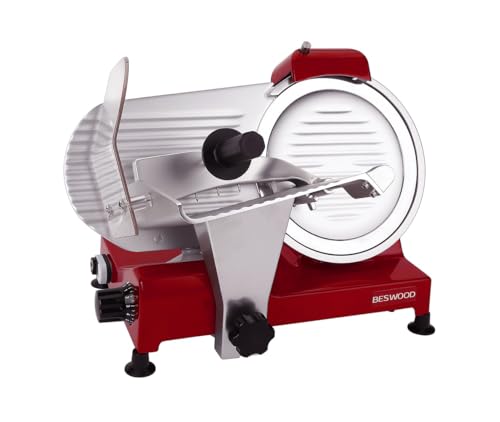
- 10-inch corrosion-resistant chromium-plated blade
- 240W motor with aluminum construction
- Removable serving plate and cleaning accessories
Best For: Larger kitchens and frequent slicing
Space-Saving Pick

- Folds for compact cabinet or drawer storage
- 6.7-inch German RSG stainless steel blade
- 0–20mm thickness adjustment and safety lock
Best For: Compact kitchens and flexible home slicing
Compact Everyday Pick

- 200W motor with 0–15mm thickness dial
- Removable 7.5-inch stainless steel blade
- Compact body with safety guard and food pusher
Best For: Routine home slicing and easy storage
Commercial Power Pick – VEVOR 10-Inch Meat Slicer
For shoppers seeking powerful meat slicers for frequent kitchen or commercial-style use, this VEVOR model combines a 10-inch carbon steel blade with a 240W motor. Its broad thickness range and built-in sharpening stone make it suitable for frozen meat, roasts, ham, and other foods.
Best For: High-volume slicing and users who want a larger blade and commercial-style construction.
Pros:
- 10-inch carbon steel blade handles frozen, raw, and cooked meats.
- Adjustable thickness from 0 to 0.47 inches.
- Removable food-contact parts simplify cleaning.
- Raised-spike food pusher and non-slip feet improve stability.
Cons:
- At 34 pounds, it is heavy and less convenient to move or store.
- Hand-wash care is required.
This is a substantial option for buyers who prioritize capacity, stability, and slicing speed over portability. Its larger footprint and heavier build make it better suited to a dedicated countertop than occasional use.
Flexible Home Choice – CUSIMAX 8.7-Inch Meat Slicer
This CUSIMAX is one of the more versatile meat slicers for home kitchens, with two stainless steel blades and thickness control from ultra-thin slices to about 3/4 inch. It can handle meat, cheese, bread, produce, and other everyday foods.
Best For: Home cooks who want one slicer for deli foods, bread, cheese, and produce.
Pros:
- Includes serrated and non-serrated blades for different foods.
- Adjusts from ultra-thin slices to approximately 3/4 inch.
- Removable blade, food pusher, and carriage support easier cleaning.
- Non-slip feet and blade guard add operating stability and protection.
Cons:
- The 200W motor is designed for home use rather than heavy commercial workloads.
- Its 8.7-inch blade is smaller than the 10-inch option in this roundup.
With a relatively light 10.8-pound design, interchangeable blades, and removable components, this model offers a practical balance of versatility and convenience for routine home slicing.
Safety-Focused Versatility – VEVOR 8.6-Inch Dual-Blade Slicer
Among compact meat slicers, this VEVOR stands out for its dual-blade setup and safety features. The 200W motor, 0-to-0.6-inch thickness range, and included serrated and non-serrated blades cover foods from frozen meat and ham to baguettes and vegetables.
Best For: Home users who want interchangeable blades, adjustable cuts, and added stability.
Pros:
- Includes 8.6-inch serrated and non-serrated SUS420 stainless steel blades.
- Thickness adjusts from 0 to 0.6 inches.
- Dual security lock, food pusher, and suction-cup feet support safer operation.
- Removable blade, pusher, and slide bar extender make cleaning easier.
Cons:
- Hand-wash care is required.
- Semi-automatic operation still requires hands-on feeding.
This is a well-rounded home slicer for buyers who value flexibility and secure placement. Its compact 14-pound design is easier to manage than a commercial model while still offering useful capacity and control.
Trusted Countertop Classic – Cuisinart Kitchen Pro Food Slicer
The Cuisinart Kitchen Pro is a compact choice for shoppers comparing meat slicers for routine countertop use. Its 7.5-inch stainless steel blade and slice-control knob cover very thin prosciutto-style cuts through 1/2-inch servings of meat, cheese, bread, and vegetables.
Best For: Home cooks who want precise thickness control and a recognizable countertop design.
Pros:
- Thickness adjusts from 1/32 inch to 1/2 inch.
- Removable blade, food guide, and carriage simplify cleanup.
- Heavy-duty 130W motor with coated steel and die-cast aluminum housing.
- Includes a limited three-year motor warranty.
Cons:
- The 7.5-inch blade is smaller than those on the other featured models.
- Hand-wash care is required.
This slicer suits buyers who prioritize fine control, manageable size, and straightforward home use. It is a sensible fit for prepared roasts, firm cheeses, bread, and similar foods rather than large-scale slicing.
Heavy-Duty Pick – VEVOR 12-Inch Commercial Meat Slicer
If you need meat slicers for frequent prep or larger cuts, the VEVOR 12-inch commercial model offers a substantial carbon steel blade, adjustable thickness, and a stable aluminum-alloy build. Its semi-automatic design is suited to slicing meat, vegetables, and other firm foods.
Best For: Home cooks or small food-service settings that want a large blade and commercial-style construction.
Pros:
- 12-inch carbon steel blade is designed for meat, vegetables, and other firm foods.
- Thickness adjusts from 0 to 15 mm for thin or thicker slices.
- Built-in sharpening stone supports blade maintenance.
- Food pusher, transparent baffle, safety guard, waterproof switch, and rubber feet add stability and protection.
Cons:
- At 46.3 pounds, it is much heavier and less portable than compact meat slicers.
- Hand-wash care may require more cleanup effort.
- Its large 21.6-by-17.7-by-16.5-inch footprint needs substantial counter space.
The VEVOR stands out when blade size and sturdy construction matter more than portability. It is a practical choice for buyers who regularly prepare larger batches and have room for a commercial-style appliance.
Most Versatile – OSTBA Electric Meat Slicer with Dual Blades
Among compact meat slicers, the OSTBA is flexible because it includes serrated and non-serrated stainless steel blades. Its 200W motor, 0–15 mm thickness dial, and removable components make it suitable for everyday slicing of meat, bread, cheese, fruits, and vegetables.
Best For: Home kitchens that need one slicer for varied foods and straightforward cleanup.
Pros:
- Two interchangeable 7.5-inch blades handle different food textures and slicing styles.
- Adjustable thickness ranges from ultra-thin to approximately 15 mm.
- Detachable blade, carriage, pusher, slide-rod extension, and ring guard simplify cleaning.
- Safety lock, power-button requirement, and suction-cup feet support secure operation.
Cons:
- The 7.5-inch blades are smaller than the VEVOR’s 12-inch blade.
- Its 200W motor is less powerful than the larger commercial model listed here.
The OSTBA offers a strong balance of versatility and convenience for home use. The dual-blade setup is particularly useful if you slice both crusty foods and delicate items, while the removable parts make routine maintenance easier.
Quiet Compact Option – 200W Home Meat Slicer with Dual Blades
For shoppers comparing compact meat slicers, this 200W home model focuses on steady, lower-noise operation and straightforward controls. It includes two removable 7.5-inch stainless steel blades, a stainless steel tray, and thickness adjustment from 0 to 15 mm.
Best For: Home users who want a compact slicer for routine meat, cheese, bread, and vegetable preparation.
Pros:
- 200W DC motor is designed for stable torque and quieter operation.
- Two removable blades provide serrated and non-serrated slicing options.
- 0–15 mm adjustment accommodates thin deli slices and thicker cuts.
- Removable blades and food tray make disassembly and cleaning easier.
Cons:
- Its 7.5-inch blades are better suited to home-scale portions than large commercial batches.
- Hand-wash care is required according to the supplied product details.
- The notes do not specify a warranty.
This slicer is a sensible fit when compact dimensions, lower-noise performance, and everyday versatility are priorities. It provides useful accessories and safety features without the larger footprint of a commercial meat slicer.
Best with Extra Features – BESWOOD 10-Inch Deli Meat Slicer
For shoppers seeking substantial meat slicers for frequent home or commercial-style prep, the BESWOOD combines a 10-inch chromium-plated steel blade with a 240W motor. Its aluminum construction, included serving plate, and corrosion-resistant blade make it suited to slicing meat, cheese, bread, fruits, and vegetables.
Best For: Larger kitchens and users who want a durable, versatile slicer with a generous blade and included cleaning accessories.
Pros:
- Premium chromium-plated, high-carbon steel blade is designed to resist corrosion and reduce frequent sharpening.
- Double illuminated ON/OFF switch is designed to help protect against power shock.
- Removable serving plate supports more convenient cleaning.
- Includes a cleaning brush, food machine oil, seal ring oil, and serving plate.
Cons:
- At 33 pounds and 20 by 17 by 14.75 inches, it is relatively large and heavy.
- Hand-wash care may require more cleanup effort.
The BESWOOD is the most substantial option in this group, prioritizing blade size, aluminum construction, and included maintenance supplies over portability. It is a strong fit when counter space and weight are less important than a more commercial-style setup.
Space-Saving Pick – Foldable Electric Meat Slicer
This foldable option stands out among meat slicers for compact kitchens. It uses a 6.7-inch German RSG stainless steel blade, offers 0–20mm thickness adjustment, and folds for storage in drawers, cabinets, or closets.
Best For: Home cooks with limited storage who want adjustable slicing for meat, bread, cheese, deli foods, fruits, and vegetables.
Pros:
- Foldable design helps reduce storage and countertop demands.
- 0–20mm thickness control supports thin to thicker slices.
- German RSG stainless steel blade is designed for strength, wear resistance, and precision.
- Child lock, food pusher protection, suction feet, and CE/ETL certifications add safety features.
Cons:
- Its 6.7-inch blade is smaller than the BESWOOD’s 10-inch blade.
- Plastic construction may feel less substantial than a metal-bodied slicer.
- Hand-wash care is required.
The foldable design makes this slicer particularly practical for apartments and smaller kitchens. Its broad thickness range and one-twist disassembly add everyday convenience, while the smaller blade favors typical home portions rather than oversized cuts.
Compact Everyday Pick – Nutrichef 200W Meat Slicer
The Nutrichef is a compact choice for shoppers comparing meat slicers for routine home use. Its 200W motor, 7.5-inch removable stainless steel blade, and 0–15mm adjustable thickness dial support slicing meat, deli foods, and bread while keeping the footprint manageable.
Best For: Home users who want an automatic slicer with straightforward controls, removable components, and modest storage requirements.
Pros:
- 0–15mm thickness dial accommodates different slice preferences.
- Removable blade and food carriage simplify cleaning.
- Safety guard, slicer knob, and food pusher support controlled operation.
- Compact 13.9 by 9.9 by 10.9-inch design weighs 7.9 pounds.
Cons:
- Its thickness range is narrower than the foldable slicer’s 0–20mm range.
- It is specified primarily for meat, rather than the broader list of foods supported by the other options.
- Hand-wash care is required.
The Nutrichef balances automatic operation, adjustable thickness, and a relatively compact body. It is a practical middle-ground option for home kitchens that want removable parts and basic safety features without the larger size of a heavier-duty slicer.
How We Picked the Best Meat Slicers
We focused on the features that matter most in everyday slicing: motor power, blade diameter, thickness adjustment, carriage design, removable components, construction, and intended workload. The selection includes compact machines for occasional home use, versatile slicers for bread and cheese, and heavier commercial-style options for frequent batch preparation.
Because specifications vary by model, shoppers should treat wattage as one factor rather than a complete measure of performance. Blade sharpness, carriage travel, food clearance, and the ability to clean the machine safely can be just as important.
Quick Comparison
| Best For | What to Look For | Typical Advantage |
|---|---|---|
| Occasional home use | Compact footprint and simple controls | Easy storage and lower cost |
| Frequent meal prep | Removable carriage and durable blade | Faster, more consistent slicing |
| Large roasts or bulk batches | 10- to 12-inch blade and sturdy platform | Greater cutting capacity |
| Multi-purpose kitchen use | Fine thickness adjustment | Useful for meats, cheese, bread, and vegetables |
Key Buying Factors for Meat Slicers
Blade Size and Cutting Capacity
Larger blades generally provide more clearance for wide roasts, ham, and cheese blocks. A 7.5- to 8.7-inch blade is often adequate for household portions, while 10- or 12-inch models are better suited to larger foods and repeated slicing.
Thickness Control
Check both the adjustment range and how securely the dial holds its setting. Thin settings are useful for deli meat and prosciutto-style cuts, while thicker settings work better for steaks, roast beef, bread, and firm cheese. A clearly marked control makes repeatable results easier.
Cleaning and Food Safety
Removable blades, carriages, and food deflectors simplify cleaning and help prevent residue buildup. Always check the manufacturer’s instructions before washing parts, and unplug the slicer before disassembly. Components should be fully dry before reassembly.
Power, Stability, and Safety
Motor wattage can indicate intended workload, but stability matters just as much. Look for non-slip feet, a food pusher, blade guards, and an emergency or safety switch design. Use short slicing sessions when a machine is intended for intermittent household operation.
Who Should Buy Which Meat Slicers?
Choose a compact 200W slicer if you want an affordable machine for occasional sandwiches, meal prep, bread, or cheese. These models usually take up less counter space but may require more patience with large or dense foods.
Choose a mid-size slicer with a removable carriage if easy cleanup and regular home use are priorities. This category offers a practical balance of capacity, control, and convenience.
Choose a 10- or 12-inch commercial-style model if you regularly slice large roasts, bulk deli meat, or multiple portions at once. These machines generally need more storage space and careful cleaning, but their larger blades and heavier construction can make demanding jobs easier.