Making bread, pizza, pasta, or sourdough at scale requires more than a powerful motor. The right dough mixer must handle your typical batch size, maintain consistent kneading performance, and fit your workspace and workflow.
This roundup compares 10 machines across countertop and commercial categories, with attention to capacity, controls, dough versatility, safety features, and practical value for frequent bakers and food businesses.
Best 10 Dough Kneading Machines for Large Batches Picks for 2026
High-Volume Pick

- Handles up to 14.88 lb dough per batch
- Timer and controlled fermentation function
- Quiet 500W motor with detachable design
Best For: High-volume baking and food-service kitchens
Most Versatile

- Professional-style spiral mixing technology
- 58 speeds for precise control
- Four included attachments for more than dough
Best For: Home bakers wanting dough and general mixing versatility
Commercial Value
VEVOR 8.5Qt Dual-Rotation Mixer
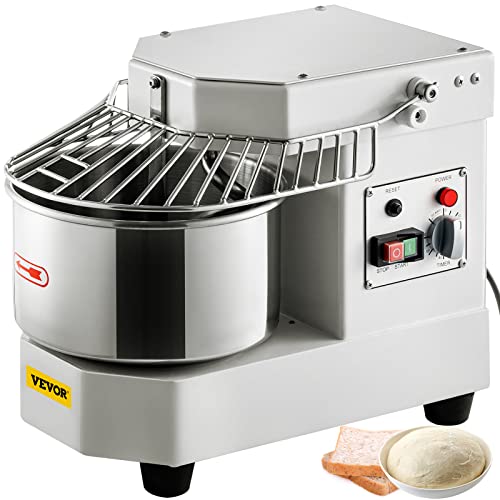
- Dual rotation promotes even dough mixing
- Handles up to 6.6 lb dough
- Safety shield and 60-minute timer
Best For: Commercial kitchens needing a sturdy moderate-capacity mixer
Best All-Purpose Commercial Mixer

- Mixes up to 3.3 lbs of food
- Includes hook, beater, and whip
- 30-minute timer with three speeds
Best For: Commercial kitchens needing dough and general mixing versatility
Best Heavy-Duty Large-Batch Mixer

- Kneads up to 55 lbs of dough
- 2,200W motor with forward/reverse rotation
- 90-degree tilting barrel for unloading
Best For: High-volume noodle, dumpling, bun, and filling production
Best Touchscreen Control
10.5-Quart Dual-Rotation Commercial Mixer
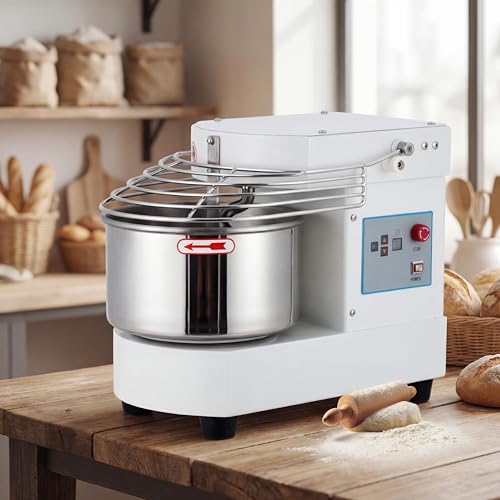
- Handles dough batches up to 11 pounds
- Touchscreen timer and safety interlock
- Stainless steel construction for commercial use
Best For: Commercial kitchens and bakeries needing digital controls
Best Heavy-Duty Capacity
INTBUYING 20-Liter Commercial Dough Mixer
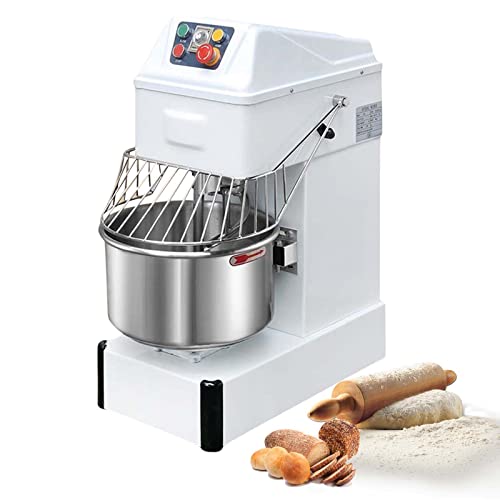
- Handles up to 8 kilograms of dough
- 1,500W motor with two speeds
- 0-to-30-minute timing and protective cover
Best For: High-volume bakeries and restaurant dough production
High-Volume Pick – 13.8QT Commercial Dough Mixer
For serious home bakers, bakeries, and food-service kitchens comparing dough kneading machines for large batches, this 13.8-quart commercial mixer offers substantial capacity and dough-focused performance. It can handle up to 14.88 pounds of dough or 9.92 pounds of flour per batch, with a timer and fermentation function for streamlined preparation.
Best For: High-volume baking, restaurants, cafeterias, and large households needing a large-capacity countertop mixer.
Pros:
- Large stainless steel bowl handles up to 14.88 pounds of dough.
- Spiral hook supports even mixing with minimal dry flour left behind.
- Built-in 5–120-minute timer and 100–108°F fermentation function.
- Quiet 500W motor is rated below 60 dB and includes motor cooling.
Cons:
- Its commercial-size footprint may be excessive for smaller kitchens.
- The 110V, 500W unit is heavier-duty than many occasional home users need.
This is the strongest capacity option in the group, particularly for repeated large batches. Its detachable bowl and hook also make cleanup more manageable, while the visible lid and touch controls add convenience during production.
Most Versatile – Ooni Halo Pro Spiral Mixer
The Ooni Halo Pro is a versatile choice among dough kneading machines for large batches, combining spiral mixing with attachments for cakes, cookies, whipped cream, and frosting. Its 7.3-quart bowl is smaller than the largest commercial models here, but 58 speed settings provide unusually fine control.
Best For: Home bakers who want professional-style dough mixing plus broad all-purpose mixer capability.
Pros:
- Spiral technology uses a rotating bowl and spiral hook to develop stronger gluten networks.
- Offers 58 speeds from 60 RPM to more than 1,000 RPM.
- Includes a breaker bar, flexible beater, spiral dough hook, and geared whisk.
- Removable stainless steel bowl and detachable spindle simplify handling.
Cons:
- Its 7.3-quart capacity is less suited to the very largest batches.
- At 14.6 kg, it is relatively heavy to move frequently.
This model stands out when dough is only part of your baking routine. The spiral system targets bread and pizza performance, while the included attachments and broad speed range make it more adaptable than a dough-only machine.
Commercial Value – VEVOR 8.5Qt Dual-Rotation Mixer
For buyers seeking dough kneading machines for large batches in a restaurant or bakery setting, the VEVOR 8-liter mixer provides dual rotation and a 6.6-pound dough capacity. Its food-grade stainless steel bowl, hook, and rod are designed for regular food-processing use.
Best For: Commercial kitchens, pizzerias, restaurants, and users who prioritize dual-rotation mixing and straightforward controls.
Pros:
- Dual rotation combines a 21 RPM bowl with a 159 RPM hook for even mixing.
- Mixes up to 6.6 pounds of dough per batch.
- Food-contact components use rust- and corrosion-resistant stainless steel.
- 60-minute timer, safety shield, automatic shutoff, and nonslip feet support practical operation.
Cons:
- Only one speed is listed, limiting mixing flexibility.
- Its 70 dB noise rating is higher than the quieter mixer in this roundup.
- The 81.6-pound weight makes repositioning difficult.
The VEVOR favors sturdy commercial operation over compact portability or extensive controls. Its dual-rotation system and safety features make it a practical workhorse for moderate large-batch production, though the single-speed design is less adaptable.
Home Fermentation Pick – 7.4QT Dough Kneader
This 7.4-quart dough kneader is designed specifically for home bread, pizza, pasta, roti, and sourdough preparation. Among dough kneading machines for large batches, it is best suited to family-size quantities, handling 600–2,100 grams of flour with hands-free kneading and built-in fermentation control.
Best For: Home bakers who want simple hands-free kneading and faster, more controlled dough fermentation.
Pros:
- Designed specifically for dough rather than general-purpose mixing.
- 7.4-quart bowl supports up to 2.1 kg of dough.
- Fermentation function heats dough to 77–100°F and may reduce rising time by up to 50%.
- Low-noise operation, reduced vibration, and a stainless steel bowl suit regular home use.
Cons:
- Its 200W motor and 2.1 kg dough limit make it less appropriate for commercial-scale batches.
- Push-button controls offer less adjustment than mixers with multiple speeds.
This is a focused, user-friendly option for family baking rather than industrial production. Its main advantage is the combination of dough kneading and controlled fermentation in a relatively compact 8-pound machine.
Best All-Purpose Commercial Mixer – VEVOR 15Qt Mixer
For buyers comparing dough kneading machines for large batches, the VEVOR 15Qt Commercial Food Mixer offers a versatile setup for dough, batters, fillings, and whipped mixtures. Its 500W motor, three speeds, stainless steel bowl, and 30-minute timer make it suitable for varied commercial kitchen prep.
Best For: Bakeries, pizzerias, restaurants, and commercial kitchens that need one mixer for dough and general food preparation.
Pros:
- 15Qt bowl mixes up to 1.5 kg or 3.3 lbs of food at a time.
- Includes a dough hook, flat beater, and wire whip for multiple recipes.
- Three speeds include a 113 RPM setting for kneading dough.
- 30-minute timer and bowl-lifting wheel reduce hands-on monitoring.
Cons:
- Its stated capacity is smaller than the largest commercial dough mixers.
- Changing speeds requires stopping the machine.
- At 105.8 pounds, it is not especially portable.
This is a flexible choice when dough is only part of the workload. The included attachments and timer add usefulness beyond kneading, while the 3.3-pound food capacity makes it better suited to moderate commercial batches than very high-volume production.
Best Heavy-Duty Large-Batch Mixer – 55-Lb Commercial Dough Mixer
Among dough kneading machines for large batches, this 55-lb commercial dough mixer is designed for high-volume food-service preparation. Its 2,200W motor, 25 kg dough capacity, forward/reverse paddle, and tilting barrel focus on efficient kneading and easier dough removal.
Best For: Restaurants, noodle shops, breakfast stores, hotel kitchens, and school canteens handling large batches of buns, dumplings, noodles, or meat fillings.
Pros:
- Handles up to 55 lbs or 25 kg of dough in one batch.
- 2,200W motor runs at 40 RPM for high-volume mixing.
- Forward and reverse rotation supports kneading and dough release.
- 90-degree tilting barrel simplifies unloading and rinsing.
Cons:
- Its large 156.5-pound frame requires substantial floor space.
- The manufacturer notes that it is not suitable for bread or pizza.
- It is specialized for commercial-scale preparation rather than general mixing.
This model is the strongest fit for buyers prioritizing batch size and commercial throughput. The tilting bowl and reverse function address common unloading challenges, but its stated limitations make it better for noodles, dumplings, buns, and fillings than bread or pizza dough.
Best Home Dough Mixer With Proofing – AIZIYO DoughChief 7.4Qt
For home bakers seeking dough kneading machines for large batches relative to everyday kitchen use, the AIZIYO DoughChief combines mixing and proofing in a compact appliance. Its 7.4-quart stainless steel bowl, hand-kneading-style mix-pause-mix program, and temperature-controlled fermentation mode support bread, pizza, pasta, and sourdough preparation.
Best For: Families and home bakers who want moderate dough batches with built-in fermentation and easy cleanup.
Pros:
- 7.4-quart 304 stainless steel bowl suits family-size batches.
- Mix-pause-mix programming simulates a hand-kneading rhythm.
- Ferment mode maintains approximately 77–100°F for proofing.
- Removable, dishwasher-safe parts simplify cleanup.
Cons:
- Its capacity is far below that of commercial 25 kg mixers.
- It has one listed speed, limiting mixing flexibility.
- Fermentation requires yeast or fermentation powder.
The DoughChief is best viewed as a home-focused dough maker rather than a commercial large-batch machine. Its main advantage is workflow convenience: it can mix, pause for a hand-kneading-style cycle, and ferment dough in one compact unit.
Best Touchscreen Control – 10.5-Quart Dual-Rotation Commercial Mixer
For bakeries, restaurants, and other professional kitchens comparing dough kneading machines for large batches, this 10.5-quart mixer combines an 11-pound dough capacity with dual-rotation mixing. Its touchscreen timer, stainless steel construction, and safety interlock are practical features for repeatable batch preparation.
Best For: Commercial kitchens and bakeries that want digital controls and a large stainless steel bowl.
Pros:
- Handles dough batches up to 11 pounds in its 10.5-quart bowl.
- Dual-motion mixing uses a 650W copper motor with stated bowl and mixing-rod speeds.
- Touchscreen timer, safety shield interlock, and self-locking emergency stop support controlled operation.
- Stainless steel bowl, container, and blade materials suit frequent food-preparation use.
Cons:
- At 114.6 pounds, it is not especially portable.
- The 19.5-inch depth and 18.1-inch height require dedicated counter or floor space.
- Its 110V commercial design may be more capacity than occasional home bakers need.
This is a strong fit when batch size, digital timing, and safety features matter more than portability. The substantial footprint and weight make it better suited to a permanent work area.
Best With Fermentation – 7.4-Quart Dough Mixer and Fermenter
Among dough kneading machines for large batches, this 7.4-quart model stands out by adding constant-temperature fermentation to its mixing function. It is sized for multiple bread, pizza, or pastry batches and includes a top window for adding water or seasoning without stopping the mixer.
Best For: Large households and home bakers who want kneading and proofing in one appliance.
Pros:
- 7.4-quart stainless steel capacity is designed for larger dough preparations.
- Constant-temperature fermentation supports a controlled proofing environment.
- Top ingredient window allows additions without stopping the mixer.
- Digital display, time setting, and auto shutoff add convenience.
Cons:
- The 250W motor and single-speed setup offer less control than a two-speed commercial mixer.
- Its stated capacity is smaller than the 10.5-quart and 20-liter options in this roundup.
- Fermentation features may be unnecessary if you already proof dough separately.
This model is appealing when workflow convenience matters as much as kneading capacity. Its fermentation function and ingredient window make it particularly practical for bread and pizza dough routines at home.
Best Heavy-Duty Capacity – INTBUYING 20-Liter Commercial Dough Mixer
For operations that prioritize maximum batch capacity, this INTBUYING mixer is one of the more substantial dough kneading machines for large batches. Its 20-liter barrel is rated for up to 8 kilograms of dough, while the 1,500W motor, dual speeds, timing function, and stand-mounted design target demanding commercial use.
Best For: Bakeries, restaurants, and food-service operations producing large bread or pizza dough batches.
Pros:
- 20-liter barrel handles up to 8 kilograms of dough at once.
- 1,500W copper-wire motor and two-speed operation support heavy mixing tasks.
- Dual-rotation design maintains broad contact between the dough and mixing mechanism.
- Programmable 0-to-30-minute operation and protective cover add convenience and safety.
Cons:
- At 270 pounds, it is difficult to move once installed.
- Its 24.4-inch depth and 34.4-inch height demand considerable space.
- The commercial capacity may be excessive for small kitchens or occasional baking.
This is the most capacity-focused option of the three and is built around high-volume production. Choose it when an 8-kilogram dough load and heavy-duty commercial format outweigh concerns about size and mobility.
How We Picked the Best Dough Kneading Machines for Large Batches
We organized these machines by the needs they are most likely to serve: home bakers making multiple loaves, serious hobbyists preparing pizza or sourdough, and commercial kitchens requiring larger capacities or longer operating cycles. We considered advertised bowl capacity, motor output, speed control, timer and fermentation features, construction materials, included attachments, footprint, and the type of dough each machine is designed to handle.
Capacity figures are not the same as usable dough capacity. Flour absorption, hydration, recipe density, and manufacturer limits all affect how much dough a mixer can knead reliably. Buyers should treat the stated bowl size as a starting point and confirm the recommended dough load before purchase.
Quick Comparison
| Best For | Typical Capacity | What to Look For |
|---|---|---|
| Small commercial or frequent home baking | 7.3–8.5 quarts | Timer, fermentation function, multiple speeds, removable bowl |
| Larger household batches | 10.5–15 quarts | Higher-wattage motor, safety shield, stable stand |
| Restaurant or bakery production | 18 quarts or approximately 55 pounds | Heavy-duty construction, commercial duty cycle, service support |
Key Buying Factors for Dough Kneading Machines for Large Batches
Capacity and Batch Size
Choose a bowl that comfortably exceeds your usual recipe size. An oversized bowl can be inefficient for very small batches, while an undersized machine may strain when mixing dense dough. For repeated production, prioritize the manufacturer’s stated dough or flour capacity rather than bowl volume alone.
Motor Power and Duty Cycle
Dense bread and pizza dough place more load on a mixer than cake batter. Higher wattage can help, but motor design, gearing, cooling, and duty-cycle ratings matter just as much. A commercial model is preferable when the machine will run several batches daily.
Speed, Timing, and Fermentation Controls
Variable speeds provide better control for mixing, kneading, and incorporating ingredients. Timers reduce hands-on monitoring, while built-in fermentation functions can simplify proofing. These features are useful, but they should not outweigh a suitable motor and stable construction.
Build Quality, Safety, and Cleaning
Stainless steel bowls and attachments are practical for frequent use. Look for splash guards or safety shields, overload protection, secure bowl locking, and controls that are easy to operate with flour-covered hands. Removable parts and accessible surfaces make cleanup significantly easier.
Who Should Buy Which Dough Kneading Machines for Large Batches?
Home bakers making several loaves or pizza bases at once should focus on 7.3- to 8.5-quart countertop machines with timers and fermentation features. They offer useful capacity without requiring a dedicated commercial workspace.
Serious hobbyists and small food businesses may prefer 10.5- to 15-quart models, especially when recipes are dense or batches are prepared frequently. These machines generally provide more headroom and stability than compact mixers.
Restaurants, bakeries, and high-volume prep kitchens should consider 18-quart or approximately 55-pound commercial machines. Their larger capacity and heavier construction are better suited to production, but buyers should confirm electrical requirements, installation space, warranty coverage, and local service availability before ordering.