Choosing among meat slicers for small businesses means balancing output, slice consistency, cleanup, and upfront cost. A compact deli slicer may suit a café or specialty shop, while a heavier commercial cutter is better for sustained production.
This roundup compares ten electric slicers across motor power, blade size, adjustment range, construction, and intended workload so you can match the machine to your menu and daily volume.
Best 10 Meat Slicers for Small Businesses Picks for 2026
Heavy-Duty Pick
KWS 10-Inch Commercial Meat Slicer
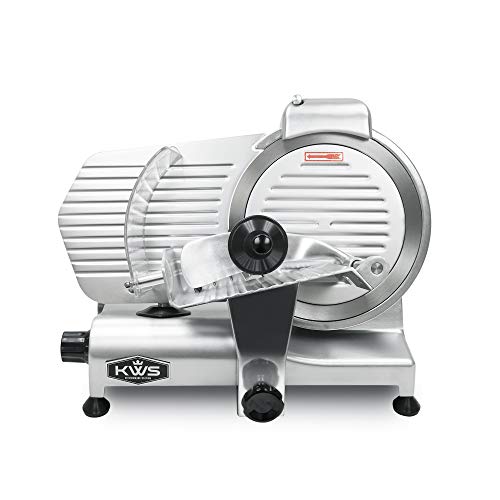
- 320W motor for repeated slicing
- 0–14 mm thickness adjustment
- NSF blade and ETL-listed design
Best For: Small delis and light commercial kitchens
Balanced Deli Choice
10-Inch 240W Electric Meat Slicer

- 240W motor with 10-inch blade
- 0–13 mm adjustable thickness
- Detachable parts and built-in sharpener
Best For: Small delis and varied food prep
High-Volume Specialist

- 850W motor with claimed 550 lb/h capacity
- Automatic vertical 5 mm slicing
- Designed for boneless fresh meat
Best For: Restaurants needing fast, consistent 5 mm cuts
Compact Versatility Pick
OSTBA 7.5-Inch Electric Slicer

- Includes serrated and smooth blades
- 0–15 mm thickness adjustment
- Compact design with removable parts
Best For: Small cafés and kitchens slicing varied foods
Heavy-Duty Thickness Control
12-Inch VEVOR Commercial Slicer

- 12-inch carbon steel blade
- 0–15 mm adjustable thickness
- Safety-focused aluminum-alloy build
Best For: Delis and restaurants needing varied slice thicknesses
High-Volume Boneless Cutting

- Up to 551 lb/h rated output
- Automatic 850W operation
- Fixed 5 mm blade set
Best For: Businesses processing high volumes of boneless meat
Compact Commercial Versatility
FOHERE 10-Inch Electric Slicer

- 0–12 mm adjustable thickness
- 10-inch stainless steel blade
- Removable parts and ETL certification
Best For: Small delis and cafés slicing varied foods
Compact Precision Pick

- 200W lower-noise DC motor
- 0–15 mm adjustable thickness
- Two removable 7.5-inch blades
Best For: Small shops and home-based food businesses
Heavy-Duty Upgrade
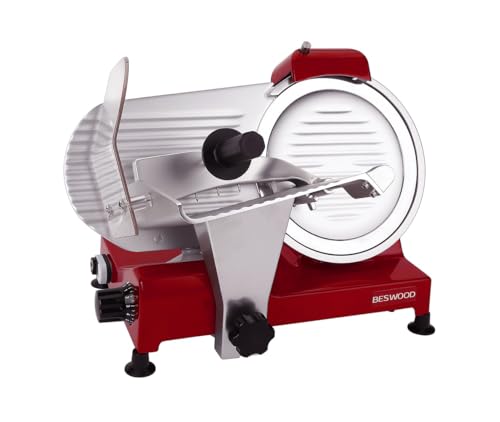
- 10-inch chromium-plated steel blade
- 240W motor and aluminum body
- Removable serving plate and cleaning accessories
Best For: Delis and small commercial kitchens
Best Compact Workhorse

- Compact die-cast aluminum design
- 0–15 mm thickness adjustment
- Two removable 7.5-inch blades
Best For: Cafés, sandwich shops, and tight countertops
Heavy-Duty Pick – KWS 10-Inch Commercial Meat Slicer
For small businesses that need dependable meat slicers for small businesses, the KWS MS-10NS offers a strong balance of power, capacity, and control. Its 320W motor, 10-inch stainless steel blade, and adjustable thickness dial suit recurring preparation of meat, cheese, and semi-frozen foods.
Best For: Small delis, light commercial kitchens, hunters, and high-volume home food preparation.
Pros:
- 320W belt-driven motor is designed for continuous slicing.
- Adjustable thickness from paper-thin to 14 mm supports deli cuts, jerky, and charcuterie.
- NSF-certified blade, ETL listing, built-in sharpener, and removable components support commercial-style use and cleaning.
- Heavy-duty cast aluminum construction helps reduce vibration during operation.
Cons:
- Its larger commercial-style design may be more machine than occasional users need.
- The optional bread-slicing attachment is sold separately.
Choose this model when consistent slicing and repeat-use durability matter more than having the smallest countertop footprint. The available parts and U.S.-based support are also useful considerations for a small operation planning long-term use.
Balanced Deli Choice – 10-Inch 240W Electric Meat Slicer
This 10-inch model is a practical option for meat slicers for small businesses that want full-size deli capacity without stepping up to a high-powered automatic machine. Its 240W motor, 0–13 mm adjustment, and detachable parts cover everyday meat, cheese, bread, and vegetable prep.
Best For: Small delis, sandwich shops, caterers, and home users preparing varied foods.
Pros:
- 240W motor and 10-inch chromium-plated steel blade handle repeated slicing sessions.
- 0–13 mm thickness control accommodates thin deli slices and thicker cuts.
- Built-in sharpener helps maintain the blade without removing it.
- Detachable carriage, safety shield, and food pusher simplify cleanup.
Cons:
- At 30.8 pounds, it is not especially lightweight for frequent relocation.
- The semi-automatic design still requires manual product feeding.
This is a well-rounded choice when a small business needs a versatile countertop slicer for several food types. Its quiet operation, safety features, and straightforward cleaning routine make it suited to regular but not necessarily industrial-scale workloads.
High-Volume Specialist – Newhai 850W 5mm Meat Cutter
For operations prioritizing speed over adjustable slicing, the Newhai is a specialized choice among meat slicers for small businesses. Its 850W motor, automatic operation, and stated capacity of up to 550 pounds per hour are aimed at high-volume preparation of boneless fresh meat.
Best For: Restaurants and large prep projects requiring consistent 5 mm slices of boneless fresh meat.
Pros:
- 850W motor is designed for stable, high-volume output.
- Vertical operation lets sliced food drop into a waiting receptacle.
- Stainless steel construction and removable blade support durability and maintenance.
- Can also process softer vegetables such as chili, mushrooms, and cabbage.
Cons:
- It produces a fixed 5 mm cut rather than offering adjustable thickness.
- It cannot process bones, frozen meat, or hard vegetables.
- At 47.5 pounds, it is heavy and intended for a dedicated workspace.
This machine makes the most sense when your menu or prep routine calls for one consistent cut and substantial throughput. It is less flexible than a deli slicer, but its vertical design and automatic operation can streamline repetitive boneless-meat preparation.
Compact Versatility Pick – OSTBA 7.5-Inch Electric Slicer
The OSTBA is a compact, flexible option for meat slicers for small businesses that need to handle more than meat. Its two interchangeable blades, 0–15 mm thickness control, and removable components support deli items, bread, cheese, fruits, and vegetables.
Best For: Small kitchens, cafés, sandwich businesses, and operators with limited counter space.
Pros:
- Includes serrated and non-serrated 7.5-inch stainless steel blades for different foods.
- 0–15 mm adjustment covers delicate thin slices through thicker cuts.
- Safety lock, power-button requirement, food pusher, and suction feet add operational protection.
- Removable carriage, blades, guard, and other components make cleanup easier.
Cons:
- The 7.5-inch blades provide less capacity than the 10-inch commercial-style models.
- Its 200W motor is lower-powered than the larger heavy-duty options.
Consider the OSTBA when versatility, compact dimensions, and easy cleanup are more important than maximum throughput. The dual-blade setup is particularly useful for businesses that alternate between meats, cheeses, bread, and produce.
Heavy-Duty Thickness Control – 12-Inch VEVOR Commercial Slicer
For meat slicers for small businesses that need broad thickness control, this VEVOR model combines a 12-inch carbon steel blade with a 0–15 mm adjustment range. Its aluminum-alloy body, built-in sharpening stone, and safety-focused design suit deli and restaurant prep.
Best For: Small delis, restaurants, and kitchens slicing meat, cheese, and firm vegetables in varied thicknesses.
Pros:
- 12-inch carbon steel blade handles frozen meat, steak, ham, and hard vegetables.
- Adjustable thickness from 0 to 15 mm supports thin and thick cuts.
- Built-in sharpening stone simplifies blade maintenance.
- Safety guard, food pusher, waterproof switch, and rubber feet support stable operation.
Cons:
- At 46.3 pounds, it is a substantial countertop appliance.
- Hand-wash care is required.
- It operates semi-automatically rather than fully automatically.
This is a strong fit when flexibility matters more than portability. The large blade and wide adjustment range make it versatile, while the heavier aluminum construction favors a dedicated prep station.
High-Volume Boneless Cutting – VEVOR 850W Meat Cutter
Among meat slicers for small businesses, this VEVOR machine stands out for speed and throughput. Its 850W motor is rated for up to 551 pounds per hour, but its fixed 5 mm blade setup is aimed specifically at boneless meat and soft vegetables.
Best For: Butcher counters, restaurants, supermarkets, and farmers’ markets processing large quantities of boneless meat.
Pros:
- 850W motor and 1,700 rpm operation support rapid cutting.
- Rated capacity reaches up to 551 pounds per hour.
- Stainless-steel construction and anti-slip rubber base promote durability and stability.
- Detachable stainless-steel blades simplify cleaning and replacement.
Cons:
- Only 5 mm blades are included, limiting thickness flexibility.
- Not suitable for bone-in meat, frozen foods, or hard vegetables.
- Protective blade oil must be cleaned before first use.
This model makes the most sense for businesses with a consistent need for 5 mm slices and high output. Buyers needing custom thicknesses or frozen-food capability should consider a more adjustable slicer.
Compact Commercial Versatility – FOHERE 10-Inch Electric Slicer
For meat slicers for small businesses that also need to handle cheese, bread, and vegetables, this FOHERE model offers a practical countertop format. It pairs a 300W motor with a 10-inch stainless steel blade, removable parts, and adjustable slicing from 0 to 12 mm.
Best For: Small delis, cafés, sandwich shops, and home-based food businesses needing versatile countertop slicing.
Pros:
- Adjustable 0–12 mm thickness accommodates thin deli slices and thicker cuts.
- 10-inch stainless steel blade is designed for meat, cheese, bread, and vegetables.
- Compact footprint and removable parts support countertop use and cleanup.
- ETL certification, anti-slip features, and a secure food pusher add practical safety benefits.
Cons:
- The 300W motor is less powerful than the 850W VEVOR cutter.
- At 38.6 pounds, it is portable only with some effort.
- Hand-wash-only care may require additional cleanup time.
This is a balanced option for smaller operations that value versatility and a manageable countertop design. Its two-year warranty and adjustable settings add appeal for businesses handling varied daily prep.
Compact Precision Pick – 200W Home Food Slicer
For small businesses that need occasional slicing without a large commercial footprint, this 200W model is a practical option among meat slicers for small businesses. It offers adjustable 0–15 mm thickness settings, two blade styles, and a removable stainless steel tray for handling meat, cheese, bread, and vegetables.
Best For: Small shops, cafés, and home-based food businesses that value compact storage and flexible slicing.
Pros:
- 200W DC motor is designed for stable, lower-noise operation.
- Adjustable 0–15 mm thickness supports consistent, customized slices.
- Includes serrated and non-serrated 7.5-inch stainless steel blades.
- Removable blades and tray simplify hand washing and routine maintenance.
Cons:
- Its 7.5-inch blades and home-oriented design may be less suitable for high-volume production.
- Product care instructions specify hand washing only.
This slicer makes the most sense when counter space, noise, and versatility matter more than continuous commercial throughput. The safety lock, non-slip feet, and compact dimensions add useful convenience for smaller workspaces.
Heavy-Duty Upgrade – BESWOOD 10-Inch Deli Slicer
Businesses seeking a more substantial machine may prefer this BESWOOD model when comparing meat slicers for small businesses. Its 10-inch chromium-plated steel blade, 240W power, removable serving plate, and 33-pound aluminum construction are suited to a more robust deli-style setup.
Best For: Delis, butcher counters, and small commercial kitchens that want a larger, sturdier slicer.
Pros:
- 10-inch high-carbon, chromium-plated steel blade is designed for corrosion protection and reduced sharpening frequency.
- 240W motor provides more power than the smaller models in this roundup.
- Removable serving plate supports easier cleaning.
- Includes a cleaning brush, food machine oil, seal ring oil, and serving plate.
Cons:
- At 33 pounds and 20 by 17 by 14.75 inches, it requires substantial counter and storage space.
- Hand-wash care may make cleanup more involved than with fully dishwasher-friendly equipment.
The BESWOOD is the strongest fit here for operators who prioritize blade size and a heavier aluminum body. Its larger footprint makes it less convenient for very tight counters, but potentially more appropriate for regular deli-style preparation.
Best Compact Workhorse – 200W Electric Deli Slicer
This compact 200W electric slicer is a sensible choice for meat slicers for small businesses that need everyday versatility on a limited budget or countertop. It combines 0–15 mm thickness control with two removable 7.5-inch blades and a removable carriage for slicing meat, cheese, bread, and vegetables.
Best For: Small counters, cafés, sandwich shops, and businesses that need easy-to-store general-purpose slicing equipment.
Pros:
- Compact 14.17-by-12.2-by-9.64-inch design fits many countertops and cabinets.
- Two stainless steel blades accommodate different slicing tasks.
- Removable blade, carriage, slide-rod extension, and food pusher support thorough cleaning.
- Non-slip suction-cup feet and a food pusher that doubles as a blade guard improve stability and hand protection.
Cons:
- Its 7.5-inch blades and 200W motor are better suited to smaller workloads than heavy production.
- Hand washing is required according to the care instructions.
Compared with the first 200W model, this version emphasizes a die-cast aluminum body and a more extensively removable carriage assembly. It is a practical match for small operators who want straightforward cleanup and compact storage.
How We Picked the Best Meat Slicers for Small Businesses
We focused on practical features that affect day-to-day commercial use: motor power, blade diameter, adjustable slice thickness, removable components, food-contact materials, stability, and cleaning access. We also separated lighter countertop slicers from high-output machines so a small business can compare like-for-like options.
Specifications such as wattage and stated capacity are useful starting points, but they do not tell the whole story. Duty cycle, operator workflow, included safety features, and the manufacturer’s cleaning instructions can be equally important. Always verify electrical requirements, certification, warranty coverage, and replacement-blade availability before ordering.
Quick Comparison
| Business need | Look for | Best fit among these types |
|---|---|---|
| Occasional slicing | 200–240W motor, compact footprint, removable parts | Home-style countertop slicer |
| Daily deli or café use | 10-inch blade, adjustable thickness, sturdy carriage | Mid-range commercial slicer |
| Higher-volume prep | Heavy-duty construction, high-power motor, larger capacity | 850W commercial meat cutter |
| Large roasts or frequent service | 12-inch blade, stable base, accessible controls | Large commercial slicer |
Key Buying Factors for Meat Slicers for Small Businesses
Motor and Duty Cycle
Higher wattage can help with tougher products and longer batches, but it is not a guarantee of commercial durability. Check whether the machine is designed for continuous or intermittent operation, and choose a model with headroom above your normal workload.
Blade Size and Thickness Control
A 7.5-inch blade keeps the machine compact, while 10- and 12-inch blades generally accommodate larger cuts and can improve productivity. Confirm the adjustment range suits your menu, from thin deli slices to thicker portions. A precise dial is more useful than a wide but inconsistent range.
Cleaning and Food Safety
Removable blades and food-contact parts make cleanup easier, but they also require careful reassembly. Look for stainless steel components, smooth surfaces, a removable carriage where available, and clear instructions. Unplug the slicer before cleaning and never rely on advertised removability without checking the manual.
Stability and Operator Safety
Non-slip feet, a food pusher, blade guards, and a secure carriage help reduce risk during repetitive work. Keep hands behind the guard, use the pusher instead of fingers, and allow the blade to stop fully before moving food or wiping the machine.
Space, Power, and Service
Measure counter depth and clearance around the slicer before buying. Commercial machines may require a dedicated outlet or more ventilation. For a business, accessible replacement blades, responsive support, and a useful warranty can matter more than a small difference in purchase price.
Who Should Buy Which Meat Slicers for Small Businesses?
Choose a compact 200–240W slicer if you run a café, sandwich counter, small shop, or catering operation with modest batches and limited counter space. These models can offer convenient thickness adjustment and easier storage, but may need longer cooling intervals.
Choose a 10-inch commercial slicer for regular deli, cheese, roast, or charcuterie prep. It is the sensible middle ground for many small businesses because it combines manageable size with a larger blade and sturdier workflow.
Choose an 850W or 12-inch machine when volume, product size, and speed justify the added footprint and cost. These options are better suited to frequent production, but confirm that your electrical setup, cleaning routine, and staff training can support them.